Global business – enablers of globalization
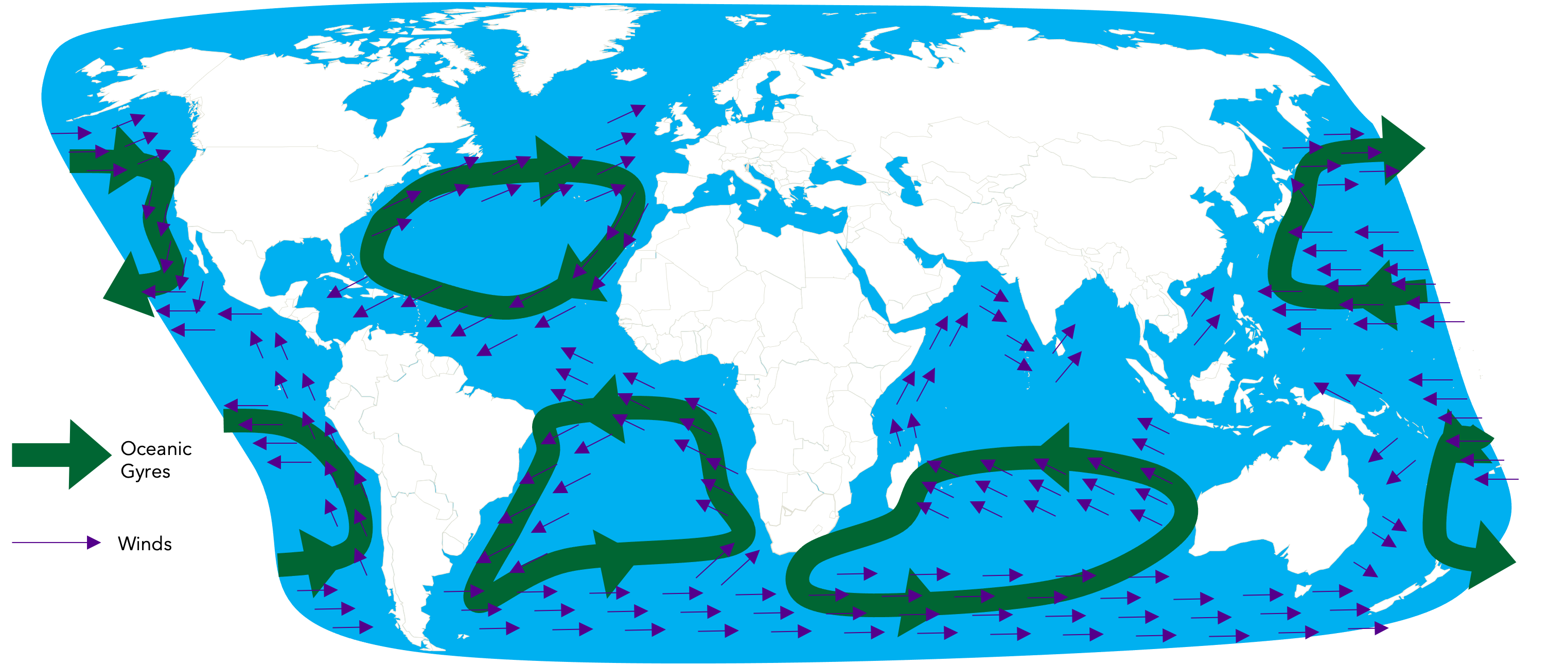
There are five main marine currents in the global ocean system, with associated wind currents created by the rotation of the Earth. These currents rotate in a circular pattern clockwise north of the equator and counterclockwise south of the equator. Sailing vessels were the initial means by which humans reached other continents, with captains adjusting the sailing direction to the prevailing wind and water currents. There was no technical possibility of sailing upstream and downwind. Thus, the prevailing winds and currents determined the first trade flows between maritime nations (Exhibit 2-10).
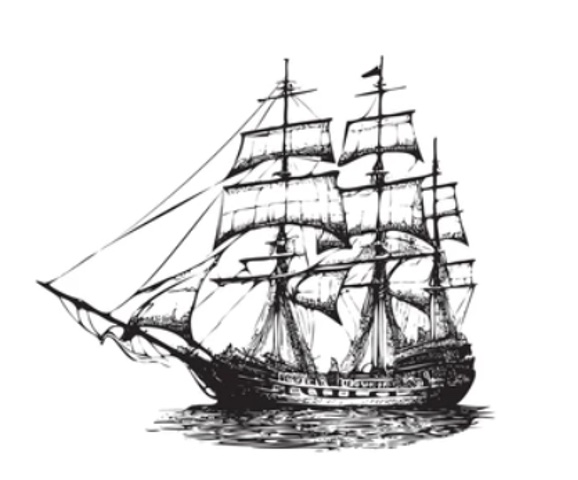
The earliest known sailing caravansaries in Spain and Portugal were built in the 13th century. They were small, three-masted vessels with a crew of up to six and could carry up to 50 tons of cargo. The first sailing ships were used as fishing vessels or coastal cargo ships (Ausubel et al., 2001). Shipping was carried out not far from shore until the middle of the 14th century, as the first ships were not suitable for use on the high seas. Then, as ships were improved, they began to be used for exploration.
Global business – enablers of globalization
The peak of the caravel was the period from the 1430s to the 1530s when the whole of Europe used these ships for trade and discovery. Many ships could carry between 100 and 200 tons of cargo at that time and were armed with cannons for protection. The most famous caravels were the Nina and the Pinta, which sailed with Christopher Columbus on his first voyage to the New World. From the 16th century onwards, much larger ships capable of carrying around 400 tons of cargo were built and used, with some reaching up to capacity of 1000 tons. Early European maritime expeditions in the late 15th and early 16th centuries were dominated by Portugal and Spain using caravels (Exhibit 2-11).
Ex. 2‑10 The currents and winds that shaped humankind’s discoveries and the first international trade links
Keywords: winds, maritime shipping, global business – key enablers of globalisation
The main objective was to find a sea route to Asia to reach China and India. Direct access to Asia was sought to avoid Arab intermediation in trade. Portuguese ships explored Africa’s west coast in the middle of the 15th century. In 1488, Bartolomeu Dias reached the Cape of Good Hope and returned, reporting that he had found a route to India. Vasco da Gama rounded the Cape of Good Hope on an expedition between 1497 and 1499 and reached India by that route. He was the first European to reach south Asia by sea.
Ex. additional The caravel Global business – enablers of globalization
Keywords: early shipping, wind energy, global business – enablers of globalisation
The discovery of the sea route to Asia allowed Portugal to trade with India without Arab intermediaries and gradually by force took control of all trade routes between Europe and Asia Pacific. Thanks to superior naval technology faster and better-armed ships, most of the Arab merchant fleet was destroyed by 1515 by Portuguese. In 1511, Malacca, the most important trading centre of southeast Asia, passed to the Portuguese. In 1513, Portuguese explorers reached Canton in China and were able to use Macao as a trading depot (1557). This created an eastern European maritime trade route to Asia. Christopher Columbus was trying to find a western route to Asia. In 1492, he sailed by failure to the Americas – Bahamas and Cuba with his fleet and thought he had reached India. Instead, of reaching India, Columbus was brought to the shores of the Americas by the prevailing winds and currents in the North Atlantic.
Ex. 2‑11 Europeans’ first voyages in the 15th and 16th centuries

Keywords: voyages, discovery of Americas, global business – key enablers of globalisation
John Cabot also tried to reach Asia in 1497, looking for a northern route but reached the coasts of Newfoundland and Labrador instead. In 1519, Ferdinand Magellan launched an expedition in search of a western sea route to Asia. He reached the Pacific Ocean by circumnavigating the southern tip of South America (1520) and the strait that would later bear his name. Once in the Pacific, he was killed by indigenous peoples in 1521 in Southeast Asia in current Philippines. However, one of Ferdinand Magellan’s ships returned to Europe after circumnavigating Africa via the Cape of Good Hope, completing the first circumnavigation of the world in history in 1522. This was essentially an empirical confirmation that the earth is round. Encouraged by this success, Spain conquered the Philippines between 1565 and 1571 and established its colonial capital in Manila. Following Columbus’ discoveries, Spain and Portugal met in 1494 in Tordesillas, Spain, to negotiate the ownership of new lands. An agreement was reached on how the discovered lands would be divided between Portugal and Spain, with the territories defined by meridian. These divisions were approved by the Pope’s decrees, the Christian Church’s supreme hierarchy. No one respected the opinion of the indigenous people who lived in those lands. The technological superiority of the Europeans in weapons and warfare was used to conquer newly discovered lands. Although the geographical division of the world was established, other European countries, such as France and Great Britain, chose not to abide by these treaties, which led to a series of wars between European countries.
Global business – enablers of globalization
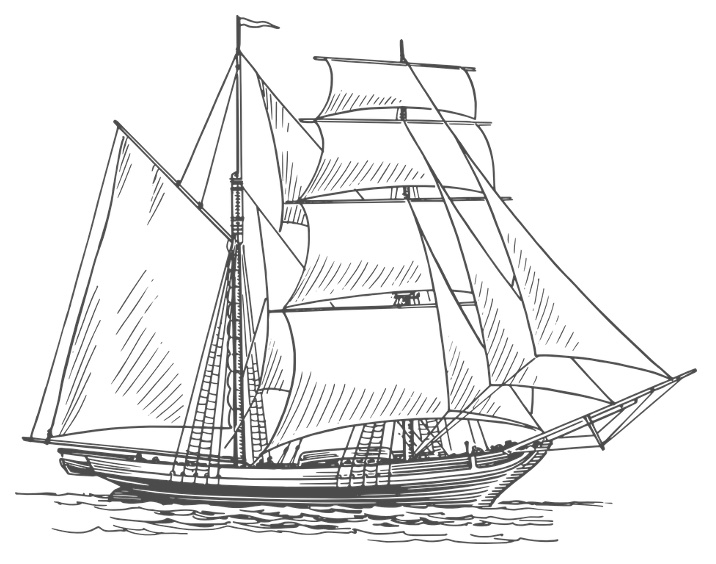
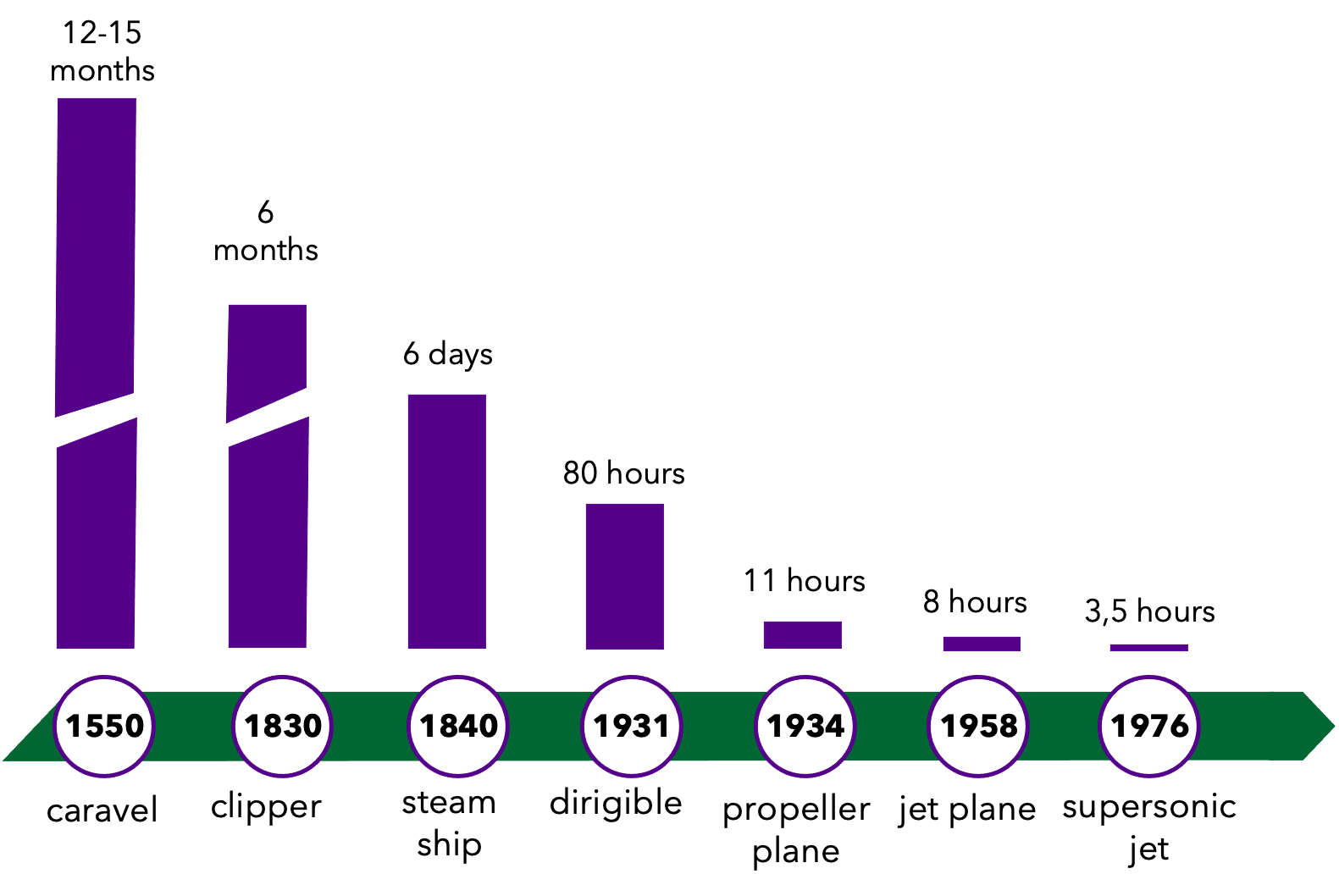
The first sailing ships were slow. A more advanced sailing ship was called as clipper. In the 1830s, this name was synonymous with a fast ship. Clipper ships were capable for sail at speed of up to 20 nautical miles per hour, but the weight of the cargo greatly used to reduce the actual speed. These ships occupied a niche in the fast cargo and passenger service of that time. The impact of these ships on international trade was profound, as before it took between 12 and 15 months to travel from South Asia to England. A clipper ship reduced it to 6 months. The growth of Chinese trade in the second half of the 19th century created the most substantial impetus for the use of clipper ships. They were particularly useful for perishable goods with limited storage period. Tea, for example, deteriorated over time, so the speed of transport was critical. Both caravels and clipper sailing ships were also used to transport people. The first migration of labor on sailing ships was forced and it left a very negative mark on the history of European countries and the USA. The sailing ships transported slaves, and the slave trade took place mainly in European and American port cities. Indigenous Africans were transported in large numbers to the North and South America, and Europe for forced labor in labor-intensive industries, especially agriculture and textiles. However, it cannot be stated unequivocally that slavery was only the result of the transport revolutions and the expansion of international trade. Slavery existed in old civilizations too, in ancient Egypt and the Roman Empire, but the development of shipping certainly increased the scale of this cruel forced migration. The processes of forced migration significantly influenced the ethnic landscape of today’s states.
Clipper ships were replaced by steamships when the first steam engines were developed, converting the expansion energy of steam into rotational energy. Initially, steamships were expensive, making their services difficult to afford and not very competitive, but as the number of steamships grew, the carrying capacity and speed of navigation increased. In addition, the opening of the Suez Canal in 1869 significantly shortened the sea route from Europe to Asia, further reducing the speed advantage of Clipper ships. The first steamships, introduced in the 1840s, revolutionized maritime transport, especially at the intercontinental level. Steamships independence from wind and currents increased trade geography.
Ex. additional Clipper sailing vessels increased the speed of international services
Keywords: clipper, transatlantic connection, global business – enablers of globalization
The vessels were made of metal, so there were no longer restrictions on size and cargo capacity that wooden sailing ships had. The first steamships could carry as much as 5 000 tons of cargo and up to 1 500 passengers. These ships began to operate regular services on established shipping routes. It used to take half a month to cross the Atlantic, and later improvements in engines reduced the journey to 10 days or less. Steamers built at the beginning of the 20th century used to cross the Atlantic in 4-5 days with a capacity of 2300 passengers.
Ex. 2‑12 The role of the Suez and Panama canals in increasing shipping speeds
Keywords: Suez canal, Panama canal, maritime shipping, global business – enablers of globalisation
This has led to a significant increase in migration from Europe to the US. Steamships were used until the beginning of commercial aviation in the 1950s. Commercial aviation replaced passenger ships, but for freight, shipping remained the primary mode of transport serving international trade. Regularly scheduled passenger shipping services evolved into cruise ships, which played more of a tourist and sightseeing role worldwide. Regular passenger ships are now limited to ferries on the seas and small passenger ships in island countries such as Indonesia, the Philippines, Greece, and the Caribbean, or the river systems of developing countries such as the Chang Jiang, the Huang He, the Nile, and the Amazon.
Global business – enablers of globalization
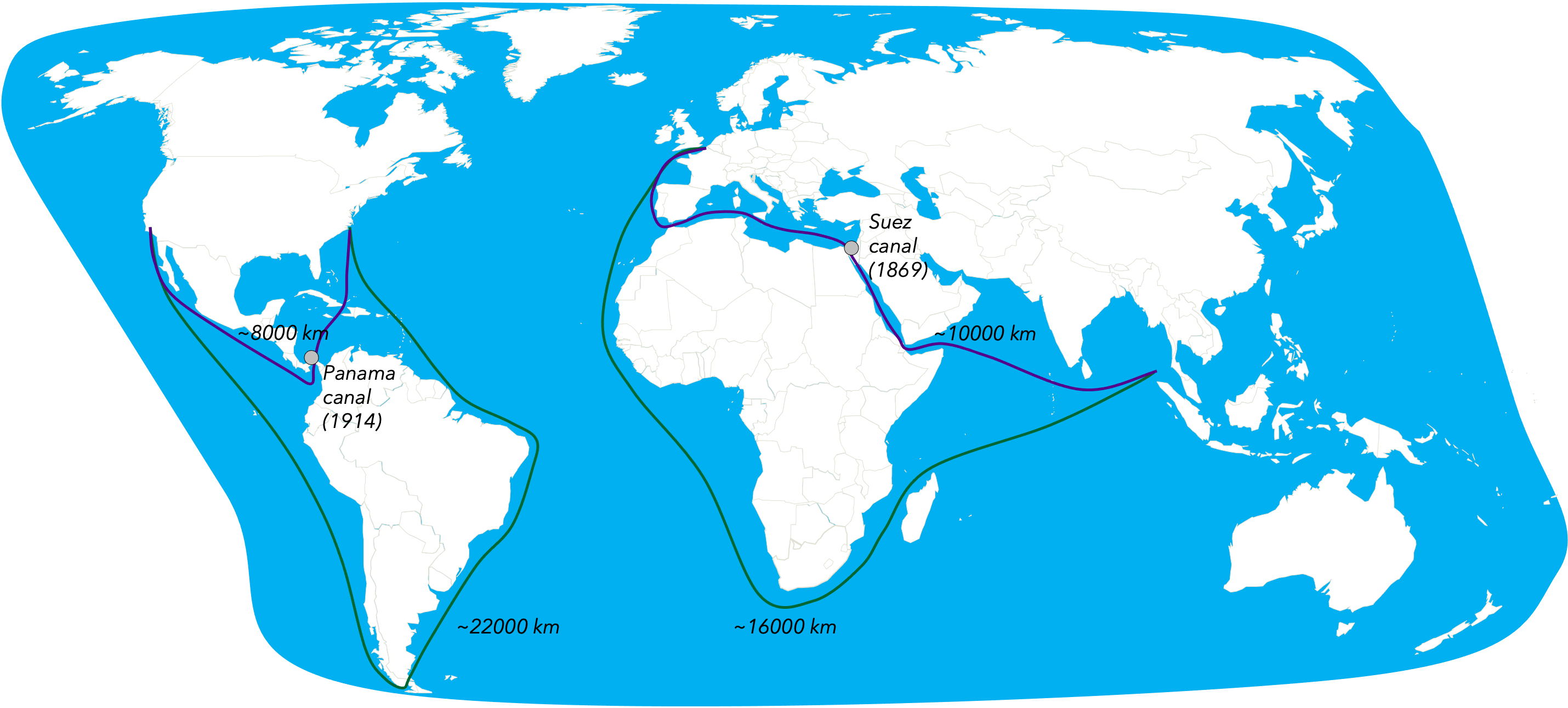
The construction of the Suez and Panama canals significantly impacted world trade (Exhibit 2-12). The simultaneous launch of steamers enhanced the importance of these canals. The Suez Canal was planned by the French but built by the British. The Suez Canal opened in 1869. The canal shortened the journey from Europe to Asia from 21,000 kilometers across the African continent to 12,000 kilometers, and sailing time was correspondingly reduced from 24 days to 14 days. This greatly boosted trade links between Europe and Asia. For example, the Suez Canal reduced the distance of a sea journey from London to Bombay by 41 percent and the trip from London to Shanghai by 32 percent.
The opening of the Panama Canal in 1914 significantly boosted trade in the Americas. It also enabled the west coast states of the USA to connect by water routes to Brazil in a shorter time and the eastern states to Chile, Peru, Ecuador, and Colombia.
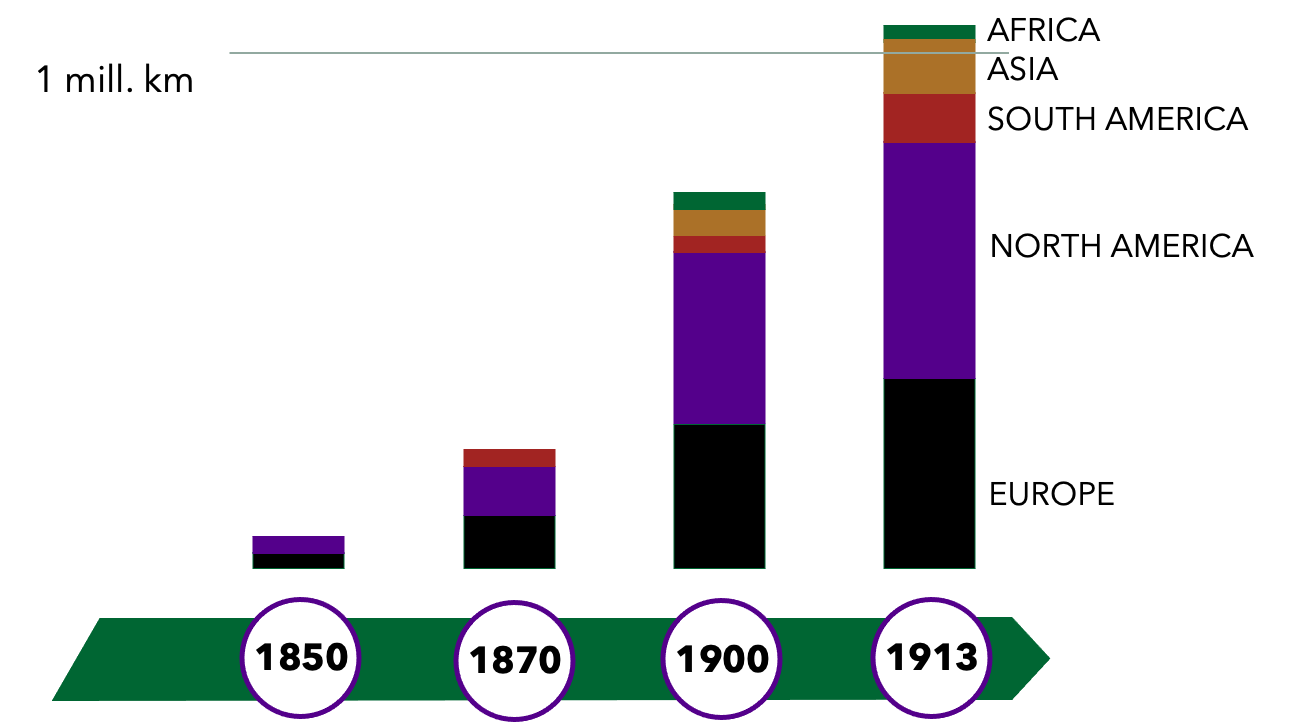
Ex. 2‑13 Railway rapid development in Europe and North America
Keywords: railways, Europe, North America
Technological advances in maritime transport have undoubtedly been the most crucial factor contributing to the development of international trade. Another significant technological discovery for trade was the railways. The first commercial railway line was opened in 1830 in England between Liverpool and Manchester. The development of rail networks made it possible to reach the natural resources of vast land areas and bring them to industrial sites or seaports. This encouraged the exchange of minerals not only within the country but also internationally between countries and different continents. Before the development of the railways, land areas were only accessible for heavier cargoes via the river system. The river system was limited, and the development of canals was very expensive. Between 1870 and 1900, railway projects in Europe and North America accelerated (Exhibit 2-14). In less developed parts of the world, such as Africa, South America, and India, the railway system was often a means of colonial control and transport of the resources of European powers.
The Atlantic Ocean has been an important challenge for long-distance passenger transport modes to test the technology due to the really long distance involved and the limited intermediate places where technical stops could be made. Economic activity on both sides of the North Atlantic has led to the need to devise a way to ensure efficient connections and the ability to trade quickly and comfortably. In the 20th century, this inspired the progress of air transport (Exhibit 2-13). The first airplanes were propeller-driven, and their speed and distance of flight were not suited to the needs of the growing trade between the US and Europe. In 1958, the turbine-powered Boeing 707 was introduced for transatlantic flights. Turbines reduced the flight time from Europe to the USA to 8 hours. Due to technical improvements in the 1950s the need for technical stops was eliminated, non-stop transatlantic service has become regular. Technological advances and market demand for even faster connections led to the Concorde, a first supersonic aircraft on regular flights between the US and Europe in 1977. The Concorde flight between New York and Paris took just 3.5 hours.
Ex. 2‑14 The duration of different transport means on transatlantic crossings
Keywords: transport means, jet plane, supersonic jet, ship, global business – key enablers of globalisation
However, these planes were very noisy. When crossing the speed of sound, the plane’s sound level was like explosion. These supersonic planes were very fuel-intensive compared to traditional turbine-powered planes, so journeys were much more expensive. The planes were mainly used by businesspeople, executives of multinational companies, and music and sports stars who could afford to travel and for whom the travel time/price ratio was acceptable. In 2000, a Concorde plane crashed on take-off from Paris airport. An investigation into the accident raised doubts about flight safety. Also considering the noise and high costs, these types of planes were abandoned in 2003.
Air transport has been the main facilitator of making new trade links. It has promoted mobility to the next level. Air freight transport has also been introduced but for relatively smaller shipment volumes than water transport. More details on the physical handling of the flow of goods on international markets and modes of transport are given in Part D, Chapter 14.
Transport is often referred to as an enabling technology because it sustains and expands economic and social interactions. Transport development is generally a cumulative process, as each new transport technology adds to previous technologies’ capacity and mobility potential. As a result, more freight, and more people can be transferred faster and more efficiently.
In summary, globalization has been influenced by several transport advances over several periods (McQuaid, et al. 2004). The first is the use of caravan and clipper-type sailing ships in the 14th and 15th centuries, which helped Europeans discover parts of the world they had not known before and to trade with those. The first advances enabled trade links to be established. The second advancement included the steamboats, canals, and railways, all brought about by the industrial revolution, and it increased the volume and scope of international trade. The third advance was the introduction of air transport, which became a major part of international transport in the mid-20th century. The fourth advance was motorways and road freight transportation. The internal combustion engine led to economies of scale and made transport for goods very efficient. The network of motorways and roads greatly accelerated production and trade within and between countries. In the European Union, for example, around 80 percent of transport today is by road. However, increasing transport volumes have led to a dramatic increase in air pollution and partly caused the climate change. Road transport is one of the biggest carbon emitters and air polluters. Today politicians are implementing various measures to make a shift of freight flow away from the roads and towards more energy and environmentally efficient railways. Intensive work is being done to develop electric and hydrogen technologies that could replace fossil fuel powered trucks.
Global business – enablers of globalization
The fifth advance is containers. From a technological point of view, this progress has been very little influenced by advances in physics or chemistry. A container is understood as a box made of steel. Before containers, goods were loaded onto ships in very different ways – in bags and boxes, which differed in size, weight, and strength. Port workers carried sacks and boxes onto the ships, either by hand or on their shoulders. Workers accessed the ship by ladders. A sliding conveyor system was also used, but the cargo also had to be stacked on the conveyor by hand. Malcolm McLean, a logistics magnate at that time noted that loading the ship takes a very long time, that not all ports have suitable cranes, and that loading the vessel is very labor-intensive. Malcolm McLean came up with the idea that if a cargo to place in a standardized uniform box, the ports worldwide could standardize the cranes to load those boxes, reducing the need for labor. In such case the shape of the cargo, or the packaging, or the weight, would no longer be so important in the loading process, as only the steel box would have to be loaded onto the ship. Malcolm McLean make design and produced first containers. He adjusted his own ships to carry those steel boxes, and in 1956 this first ship carried containers between US East and West Coast ports. It was the beginning of a global standardization of containers. The idea of transporting goods in steal boxes was also tested in Europe in the 1930s, but these were isolated attempts by local companies, mainly for railways transportation and not for sea shipping. The first sea containers were 35 feet long, 8 feet wide and 8 feet high. McLean estimated that in 1956 the typical productivity level of a stevedoring crew was between 5 and 10 tons per hour and that loading a medium-sized ship in the usual way cost 5.83 US dollars per ton, while loading containers cost less than 0.16 US dollars per ton, which is as much as thirty times cheaper. A modern gantry crane can load 500 tons per hour, up to 100 times faster than pre-container loading. The economic advantages of container shipping have become evident. The acceleration of loading has considerably increased the efficiency of ships since a vessel can make many more trips instead of spending long periods in port for the loading. This further boosted international trade in 1960 when McLean founded the container shipping organization SeaLand, which was acquired in 1999 by Maersk, the world’s largest container shipping company.
Containers were soon standardized by ISO – International Standard Organization and IMO – International Maritime Organization between 1968 and 1970. The standard container length was 40 feet, slightly longer than McLean’s first containers. Since then, many seaports have standardized port handling equipment, cranes, berths, and ship builders have standardized container ships too. Container ships started to be designed and built bigger, which each new model capable of carrying more containers. It was motivation for stevedoring companies working in ports to design and install faster and higher capacity cranes. This has made transportation of one container unit cheaper and quicker. The share of transport costs in the cost of the product has become relatively low. It inspired manages of organizations in various industries to consider shifting physical production and assembly to the countries where labor is cheaper and abundant. At the same time as global trade liberalization was taking place, China was also opening up to investors and trading partners from Western Europe and the USA. Technological opportunities combined with the political will to trade created a synergy that radically changed the world’s industrial structure within several decades. Containerization enabled production to take place in Asia and distribution and sales to the US and Western Europe. Distance became a minor obstacle, and some scholars have referred to the new global economy in their textbooks as the global village. For more on the logistical handling of international trade, see Part D of the book.
Industrial revolution along with the transport inventions are considered as one of the most important technological enablers of globalization (Hudson, 1992), however role of communications was also highly important. The first transmission of a signal over a distance was achieved by Samuel Morse in the 1930s with the development of remote signal transmission technology. In the 1950s, the development of the telegraph machine made it possible to transmit messages, and later graphic symbols, over wires by means of electrical communication. As economic cooperation between the USA and Europe grew, the need for a rapid exchange of information was enormous, and submarine cables linking the USA and Europe began to be built as early as the second half of the 19th century. By 1900, a worldwide network of telegraphic cables had been developed, which included cables under the Pacific Ocean. In 1956, the telegraph system began to move towards telephone cables with the first transatlantic telephone line. However, since their inception, submarine cables have faced a bandwidth problem that has made overseas communications expensive and mostly used for business or government transactions. Submarine cables are built by ships and are, therefore, very capital-intensive projects. The development of fiber optic transmission technology has dramatically boosted the development of a global telecommunications network, as significantly higher bandwidths have been achieved, and the signal is not degraded by distance. As a result, it became possible to transmit hundreds of gigabytes of information per second. The first transatlantic fiber-optic cable was laid in 1988.
The internet became possible by linking countries globally with a network of cables. Despite a single cable can serve many nodes, but its bandwidth is reduced as a result. Therefore, the development of submarine cables is still being intensively pursued in the 21st century. For example, in the second decade of the 21st century, significant submarine cable laying works were carried out in the Pacific Ocean to improve the Internet capacity of Asian countries. Increasing cable density provides better internet connectivity. The 2019 COVID-19 pandemic has pushed many businesses to move to remote working. This has been made possible by the already sufficiently high internet speeds. Video conferencing between employees from different continents takes place in real-time. The speed of the internet has also enabled the speed of international financial transactions.
Ex. additional The global trans-oceanic cable network

Keywords: transatlantic cable, internet
Global business – enablers of globalization
Share or comment this information on your social media:
Fundamentals of global business
First edition
For citation:
Jarzemskis A. (2025). Fundamentals of global business, Litibero publishing, 496 p.

Full scope of the book is available in various formats
A.2 History and trends of business globalisation
- The origins and genesis of globalisation in different eras
- Evolutions and shift of world economic powers and trade
- Evolution of money as unit of exchange
- The first international companies
- Mobility and communication technologies as key enablers of globalisation
- Industrial revolutions
- Differences of international business in Fordism and post-Fordism
- Questions for Chapter Review
- Chapter Bibliography
About author
The author has been teaching at several universities since 2005. 40+ scientific publications, 10+ international research projects. More about author.