There are four modes of transport – road, rail, water and air. Pipelines are sometimes considered the fifth mode of transport. Each type of transport has different characteristics, different speeds, infrastructure, transport prices and sizes of shipments. For global business, transportation is vital both for the supply of raw materials and for the distribution of manufactured products.
The accessibility of different transportation modes is crucial, but not evenly distributed. Not all organizations have direct access to a railway line, just few are located at the seaport, and even fewer are next to an airport, but it is probably difficult to find an organization that does not have road access. Roads are used both for the transportation of people and for the transportation of goods. Road transport has the greatest importance. Road transport serves even when the cargo must be transported by ship, plane or railway due to geographical, distance or quantity characteristics. Delivery to the seaport, airport, or railway terminal is usually carried out by heavy goods vehicles. Even after the cargo is loaded into a sea container, the container is often transported to the seaport or to the railway terminal on a special flatbed trailer towed by a road tractor. The same principle applies for special air cargo containers, which are first prepared in air cargo hubs, then transported by trucks to be loaded at the airfield. Additional handling and the use of intermodal transport make the transportation process more expensive due to additional transshipment of cargo or container. Transshipment also takes extra time. As a result, many industrial organizations around the world are looking for opportunities to locate their factories or warehouses as close as possible to railway lines, seaports and airports. If the factory is close to a railway mainline, then only a short extra rail connection directly linking the warehouse or manufacturing plant area to the rail network is necessary. In this case often better is to invest into short railway connector to access railway, so the use of road transport can be avoided. For transport efficiency reasons, China’s largest industrial cities are located in coastal zones, and actually include the world largest seaports, with coastal zone provinces such as the Pearl River delta, the Yangtse delta and the Beijing region producing 57 percent of the GDP of China in 2017. The ability to have direct access to a port or railway is one of the most important elements of logistical competitiveness (Ducruet & Lee, 2006). In contrast to Asia the industrial sector in America and Europe, is not concentrated exclusively close to port cities and coasts.
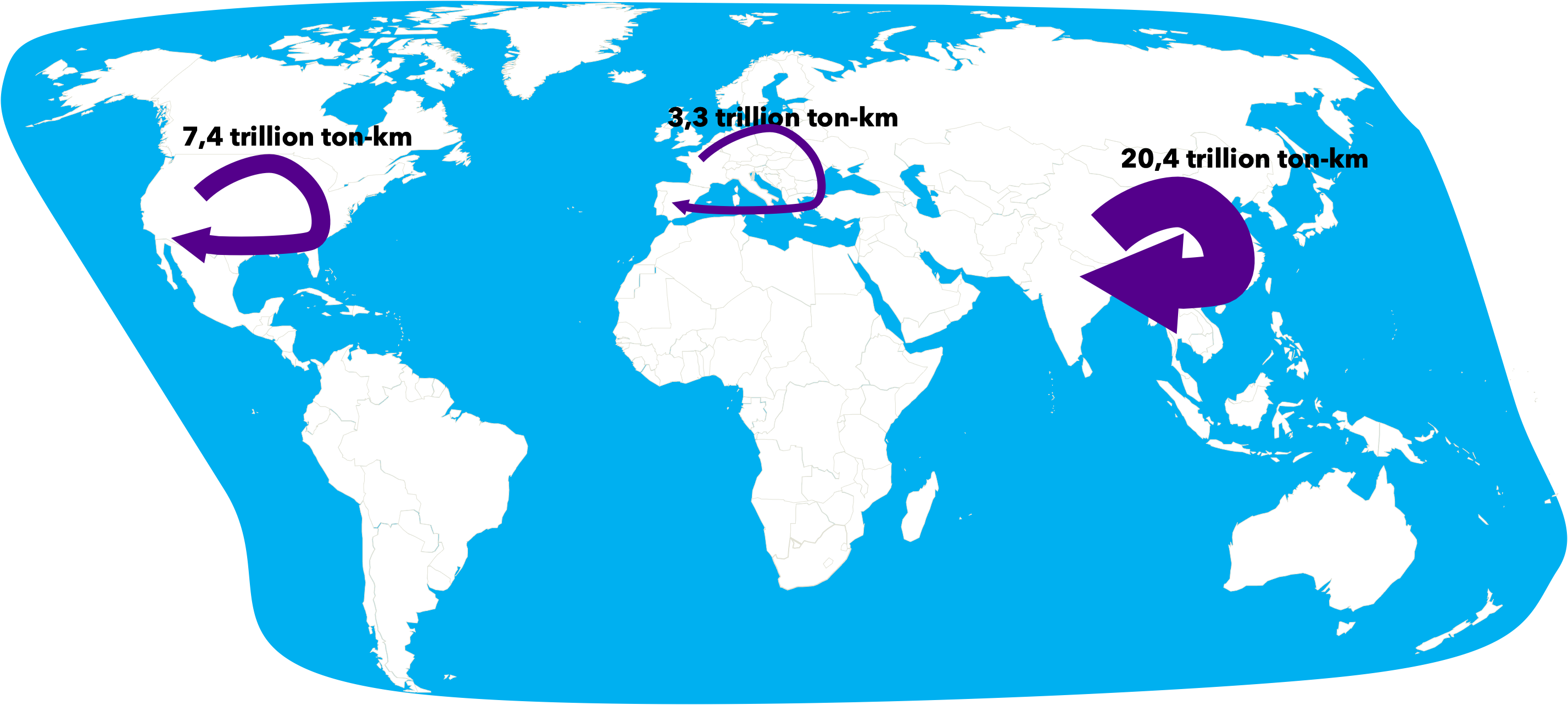
There are clear trends in the world regarding freight flows volume in ton kilometers. The largest domestic freight traffic is in China 20.4 trillion ton-kilometers, United states 7.4 trillion-ton kilometers. In European Union, due to ongoing intra-EU trade it reaches 3.3 trillion ton-kilometers freight turnover in 2020 (Exhibit 13-7). Reliable statistics on the global movement of goods do not exist, simply because many countries do not record sufficient data. Between the continents, the largest number of tons of cargo is transported by sea.
Ex. 13‑7 Domestic freight traffic in EU, US and China
Keywords: freight, cargo
Source: data compiled from national statistics offices
Ocean shipping accounting for around 90 percent of global freight traffic in ton kilometers according to data synthesized from number of different statistical reports. More about the specifics and technicalities of different cargo transportation is presented in chapter 14. Transport within the continents is mainly organized by land transport – roads, railways and inland waterways.
EU freight transport is more dominated by road transport than in the US. Rail transport holds a greater portion of the market share in the US, a much more significant share is accounted for by rail transport, although road transport continues to be the dominant mode of transportation.
Cargo flows are calculated in tons or ton-kilometers. A ton-kilometer means that one ton is transported over one kilometer. Cargo ton-kilometers (CTKs) reflect the performance, capacity, load and environmental impact of the transport system better than just tons, so they are usually used for comparing the transport systems of different countries. Comparing 1970 and 2020, the share of freight transported by road has increased in Europe, while the share of freight transported by rail and inland waterways has decreased. As the demand for transport grows in general and the share of road transport increases in relation to the total cargo turnover, the volume of road transport grows very rapidly, which has a negative impact on the environment.
Deep sea shipping and air shipping are optional due to shipment size and volumes or speed requirements. In the case of the need to transport large volumes and heavy raw materials from another continent, sea transport is one of the most preferred means of transportation (Song & Panayides, 2012). Air transport is chosen when relatively small shipments of goods, or of high value density, need to be delivered at high speed and higher safety levels. A survey conducted in 2018 about air cargo in the UK showed that 40 percent of the total import and export trade value of the goods are transported by air, making air freight very relevant for the UK economy.
Ex. 13‑8 Gradient of criteria for transport mode selection

Keywords: transport modes, shipment, trailer, truck, wagon
Most of the questions arise when choosing among the types of surface transport. Cargo brought from another continent by ship or plane can be further delivered to the final recipient by road, rail, or even inland water transport. All modes of transport are used, but their choice is determined by the type of cargo, the size of the shipment, the need for urgent transportation, the ratio of the value of the cargo to its transportation cost (ITF, 2022). In general, the spectrum of all modes of transport can be represented as a gradient in which these selection criteria vary from the lowest to the highest (Exhibit 13-8).
Energy resources are needed to transport cargo. The most prevalent kind of resource today is fossil fuel, which is burned in the internal combustion engines of vehicles, ships, locomotives, and planes.
The price of fuel makes up a large part of transport costs, but it is not equal for different types of transport. The largest reserves of fossil energy resources today, however, lie in territories classified as politically unstable, undemocratic or unpredictable. The rapid growth periods of oil prices in the 20th century and at the beginning of the 21st century showed the sensitivity of transport to this energy resource.
Railway transport uses three times less energy to transport the same amount of cargo than road transport. This is due to less friction losses at the point of contact of the wheel. Seaborne transport is superior to road and rail transport in terms of energy efficiency. It should be noted that in Europe and the United States, internal combustion engines in railways systems are gradually being replaced by electric motors, however diesel-based propulsion to be utilized in rail freight, due to a low electrification rate. Fossil fuel energy is still used in large quantities in road freight transportation.
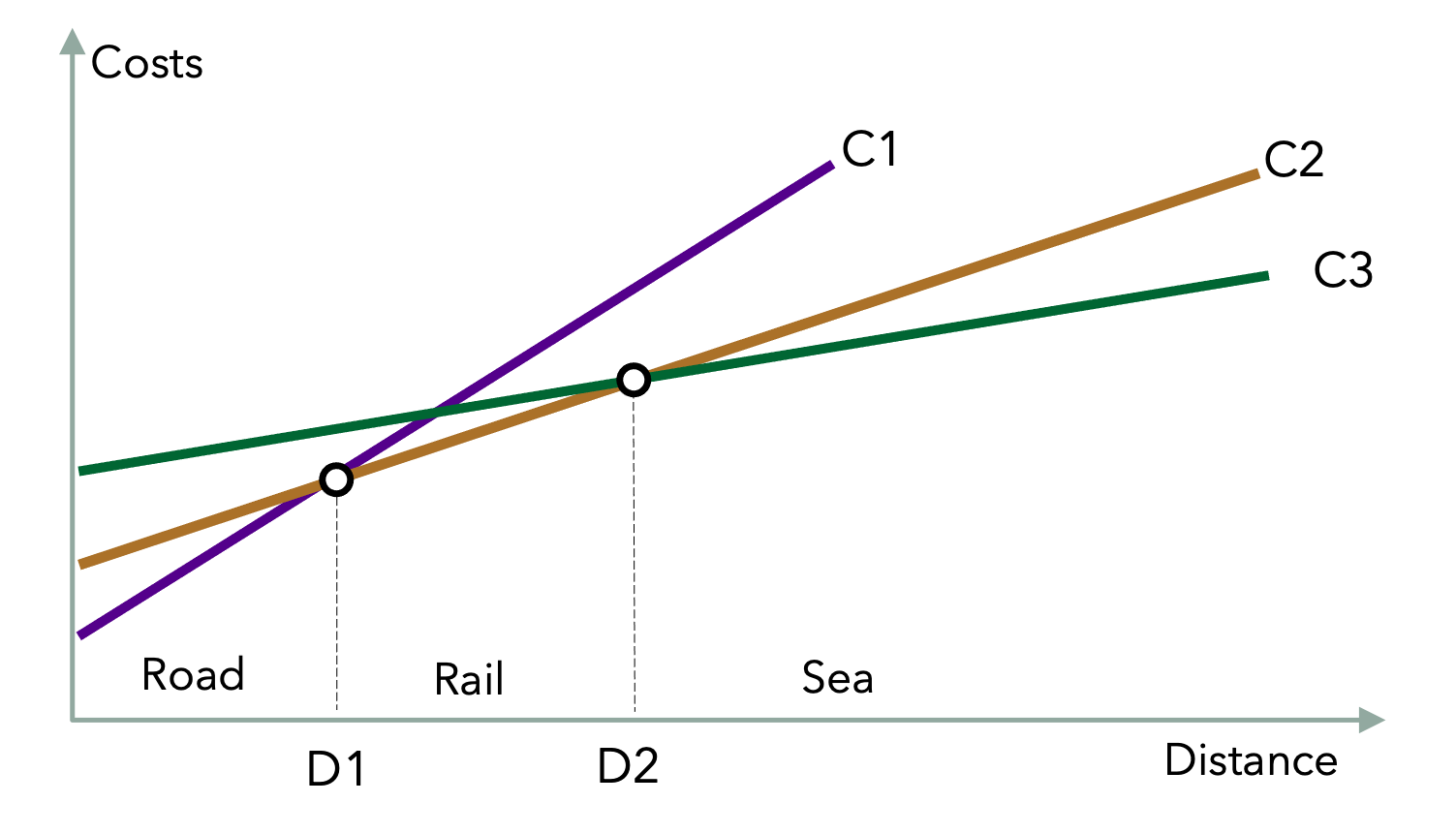
Ex. 13‑9 Transport costs dependence on distance and transport mode
Keywords: Vernon, life cycle, export
Source: (Rodrigue, 2024)
The increase in the price of fossil fuel, along with political instability in the oil rich regions, and even more importantly – forecasting the approaching depletion of oil reserves on our planet is a necessity to prioritize and make energy source replacement and enhancing its efficiency. Burning of fossil fuels leads to greenhouse gas emissions and the resulting climate change and that is another serious reason of fossil fuel use limitation and search for alternative fuels in many parts of the world. The increased price of energy resources is one of the market levers that regulate the distribution of cargo flows among various modes of transport. As the share of the fuel price in the total cost of transport increases, the market itself already is forced to look for alternative solutions for road transport. Here, for example, in the United States, fuel costs make up a quarter of the cost of road transport, and in Western Europe about a third. It can be said that road transport costs is extremely sensitive to fuel prices, with a sensitivity index between 0.25 and 0.5.
Thus, a ten percent increase in the cost of fuel increases the cost of transportation by 2.5 percent and 5 percent respectively, while an increase in fuel prices, for example, by 50 percent, increases the cost of transportation by 12.5 percent and 25 percent, respectively.
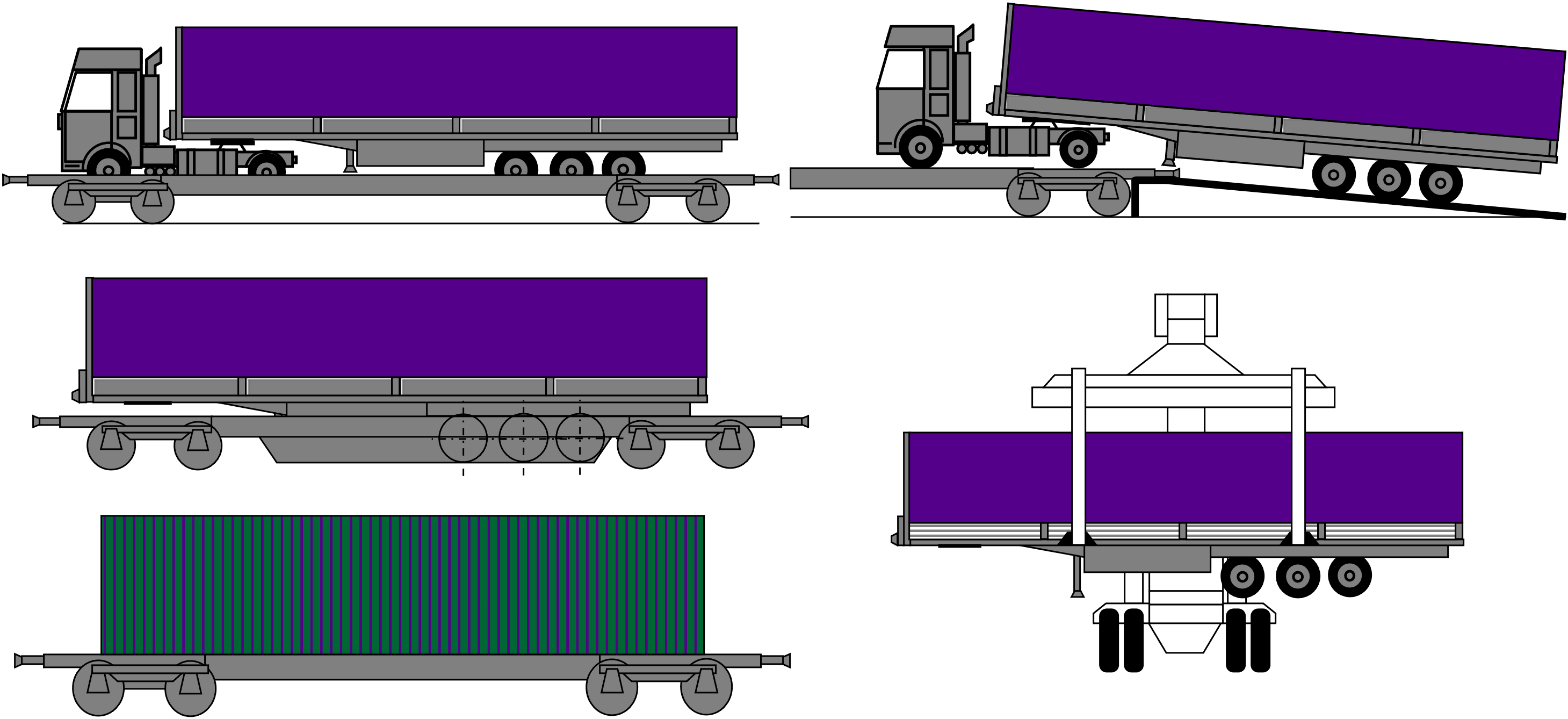
Ex. 13‑10 Transportation and loading of intermodal transport units
Keywords: intermodal, container, trailer
When selecting a mode of transport, one of the most important aspects is the nature of cargo and the specific requirements of the shipment, which are discussed in detail in chapter 14, but the distance is also very important. Up to a certain distance, it is more economically beneficial to transport goods only by road transport, in a certain distance interval, priority should be given to railways and for the longest distances, water transport works. There are many theories and different opinions about what distance is optimal for one type of transport or another. The most common theory is that road transport has an economic advantage up to 600-1000 km, and railways are more efficient if the distance is more than 1000 km. Although, for example, the EU aims to cover the first and last mile by road transport only up to distance of 300 km.
However, it is not possible to determine a specific distance for all cases, because the freight transport markets in the world are different in terms of their transport cost structure, as well as the prices of energy resources and labor price. Some dimensions may be suitable for Southern Europe, others for countries in the Alpine region, Northern Europe, Africa, and still others for the United States or Asia.
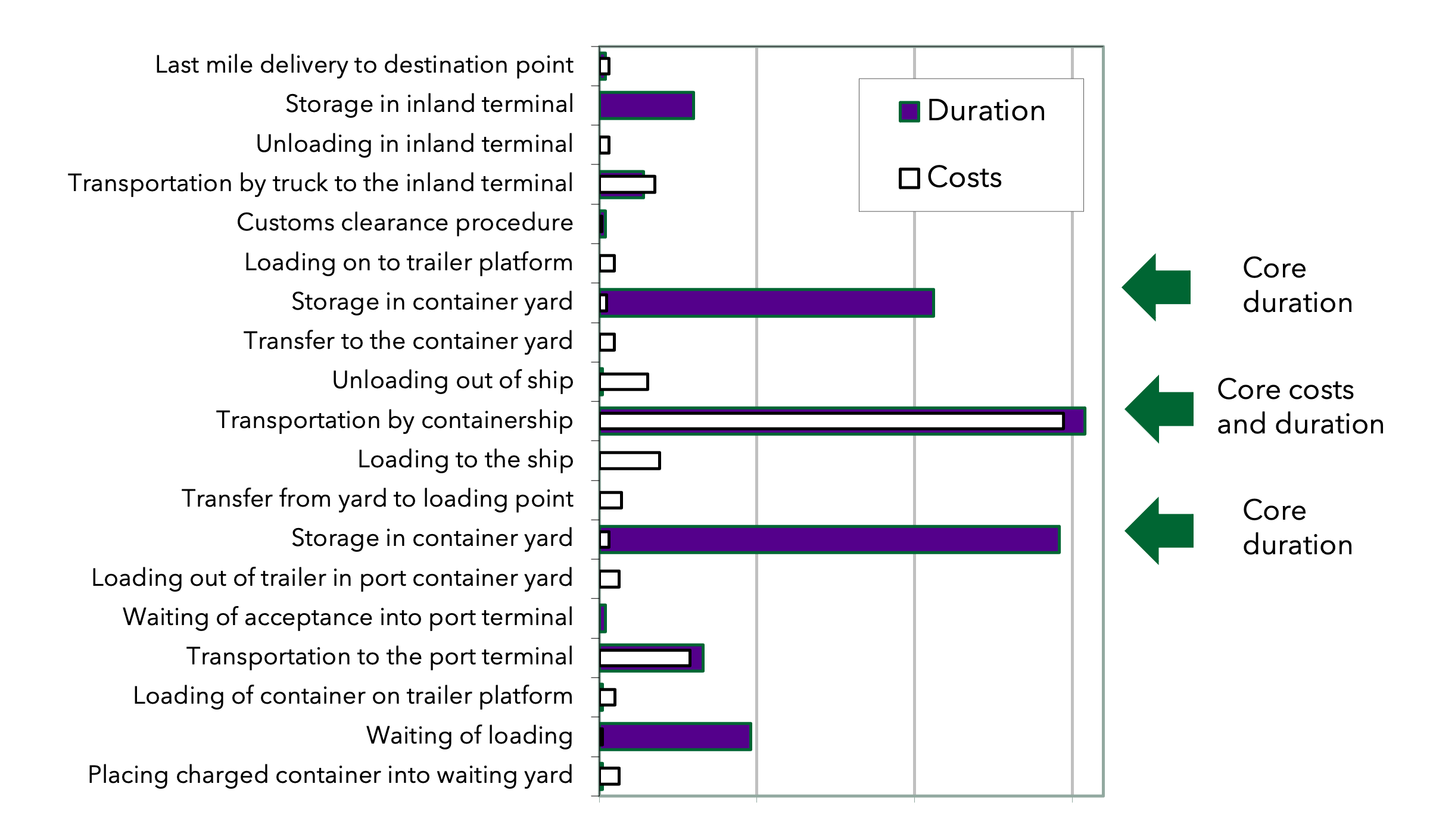
Ex. 13‑11 Cost and time of container transportation across Atlantic between US and EU
Keywords: container, loading, terminal, duration
Source: Adopted from Asia Pacific Economic Cooperation, www.apec.com
The greater the distance, the higher the relative cost of one ton of transportation over that distance. In the case of road transport, (line C in exhibit 13-9), the cost of road transport is the lowest for the distance up to the point D1, the cost of rail transport is the lowest for the distance between D1 and D2, and the cost of sea transport is lowest for the distance greater than D2 is lower.
A more specific assessment of the cost of different modes of transport is needed in the case of multimodal transport. In a multimodal transportation case, the cargo has to be transported by successively changing modes of transport, and the cargo itself is reloaded.
If a cargo isn’t transloaded itself but rather a container with cargo is transloaded from one transport mode to another, there is case of intermodal transportation (Exhibit 13-10). Sometimes the goods are transported in semi-trailers, they are transported part of the way by ferry or train, so if the semi-trailer itself is transloaded onto so called rail flat-bed wagon or ferry and not the cargo inside it, the term intermodal is also used. So, a container and a semi-trailer are called intermodal transport units or intermodal loading units.
If the transportation takes place by one mode of transport, then the distance-dependent cost of transportation of one ton is easily calculated, and in the case of multimodal or intermodal transport, a very important factor appears – cost and time of transloading. To better illustrate the situation, the exhibit 13-11 presents the structure of the absolute and conditional cost of transporting a container from a European North Sea port to a port on the east coast of the United States.
Since in multimodal or intermodal transport, additional costs are generated not only in transportation process, but at intermediate points, the ratio of the distance covered by the cheaper mode of transport and the distance covered by the more expensive mode of transport in the entire multimodal transport chain plays an important role in assessing transloading costs (Monios & Bergqvist, 2017). Road transport is the most dominant mode of transport worldwide. Although sea transport accounts for the largest share of cargo turnover in terms of tons in global trade, any cargo must finally to be delivered to the recipient’s door by road transport. The road transport has the most well developed and densest network when compared to rail and water-borne transport. It’s hard to find a business without road access, but rail or sea access is rather rare. Thus, the main advantage of road transport is its accessibility for consignor or consignee.
Ex. 13‑12 Importance of transloading costs
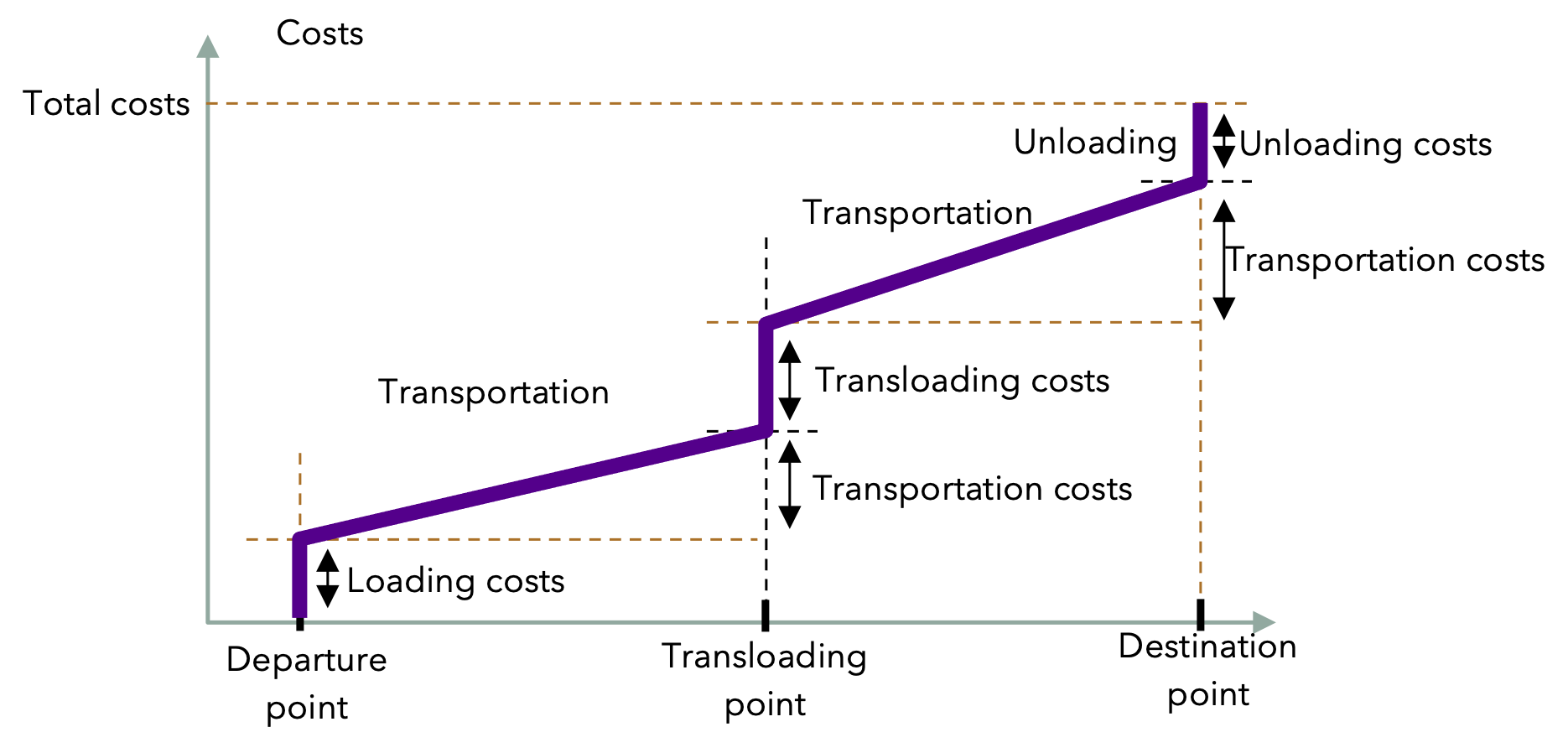
Keywords: transloading, intermodal, transportation costs
Source: (Rodrigue, 2020)
More than 90 percent of all freight transport by road in the world, if measured in ton-kilometers, is carried out using standardized trucks pooling standardized trailers. In addition to these vehicles, cargo is also transported by road by dump trucks for bulk cargo or, increasingly, by vans up to 3.5 ton for small shipments and parcel distribution in urban areas. Very heavy and very large loads are transported by specialized vehicles.
External walls of a trailer are covered by curtain or are hard-sided. Use of curtain covered trailers is very convenient and it is most widely used, because they can be loaded not only from the back, but also from the side, by closing down or raising the curtain. A common shortcoming of all curtain trailers is that the cargo they carry is easily accessible to thieves. When transporting cargo, sometimes part or all of the cargo is stolen after cutting the curtain with a simple knife in the driver’s rest areas. Hard-sided trailers are divided into simple dry box and refrigerators. Those trailers mainly carry expensive cargo. Due to the hard sides and roof of trailers, they are much better protected against theft than curtain trailers.
Ex. 13‑13 Variety and sizes of road freight transport means
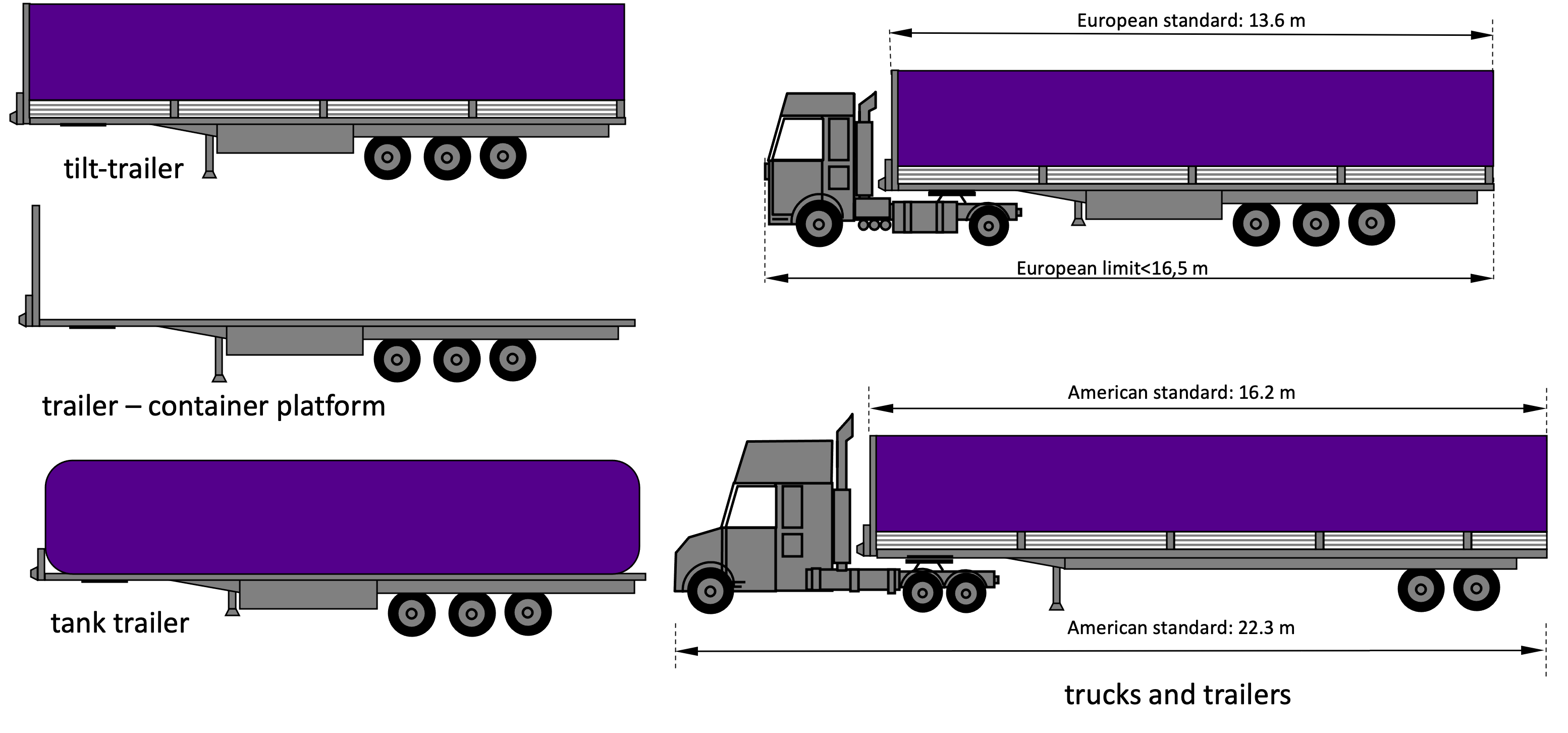
Keywords: trailer size, American truck, European truck
Due to greater security requirements, some goods such as tobacco, cigarettes, and alcohol are often transported in hard-sided trailers. However, unlike curtain trailers, goods cannot be loaded in hard-sided trailers either from the side or from the top, so their range of use is narrower, and they are less used by carriers. However, carriers prefer specialized semi-trailers.
Some clients prefer to use specialized semi-trailers. For example, for transporting hanging clothes, a hard-sided-trailers is equipped with special transverse pipes, on which clothes hangers with clothes are hung. This is how coats, suits and other finished products of the textile industry are transported. They do not wrinkle and can be hung in the store when delivered directly. For perishable goods a trailer having isothermal walls or additionally equipped with refrigerator is used. The sides and roof of an isothermal semi-trailer are covered with a special heat-insulating material. When transporting in hot summer, the interior does not heat up as quickly, and when transporting in winter, it saved from freezing. Isothermal trailers with built-in refrigeration equipment can transport chilled or frozen cargo or even freeze it. A meat, fish, sea products, a dairy product as well as fruits, flowers and vegetables are usually transported by so called ref-trailers.
The size of trailers is mostly governed by international standards. Common standard in EU is 13.6 meters long trailers, so the length of a trailer with a truck is 16.5 meters (Exhibit 13-13). In the US, the maximum permitted length of a truck and trailer units approximately 22.3 meters, and it is longer in many states than in Europe where it is limited to 18.75 meter. There is also limitation on the width of freight road vehicles. The permissible external width of a trailer in EU countries is 2.5 meter. The permitted external width for isothermal trailers and isothermal containers has been increased to 2.6 meter. The width is increased because the tank walls of these vehicles are thicker due to heat (or cold) insulating material. Restrictions also apply to the height of freight vehicles. For freight vehicles the maximum permissible height in many EU countries is up to 4 meters. The total maximum permissible weight of a loaded transport unit as truck plus trailer in most EU countries is 40 tons, of which about 16 tons is the weight of transport mean, and 24 tons is Netto mass for cargo. If a container is transported on the platform trailer so called flat bed, then the maximum permissible total weight is increased to 44 tons. In addition to gross weight restrictions, axle weight restrictions are equally important. If the load is unevenly distributed in the vehicle, one axle may be under loaded, while others may exceed the permissible load. The maximum permissible load for the drive axle is 11.5 tons, but this figure may vary in Europe and other countries. Improper load placement in a trailer often occurs when a heavy load is loaded at the front of the semi-trailer, then most of the load is not on the wheels of the semi-trailer, but on the drive axle of the truck, resulting in broken or damaged roads. In different countries, state control of overloading is applied with different strictness and vigilance.
Ex. 13‑14 Variety railway gauge widths in the world
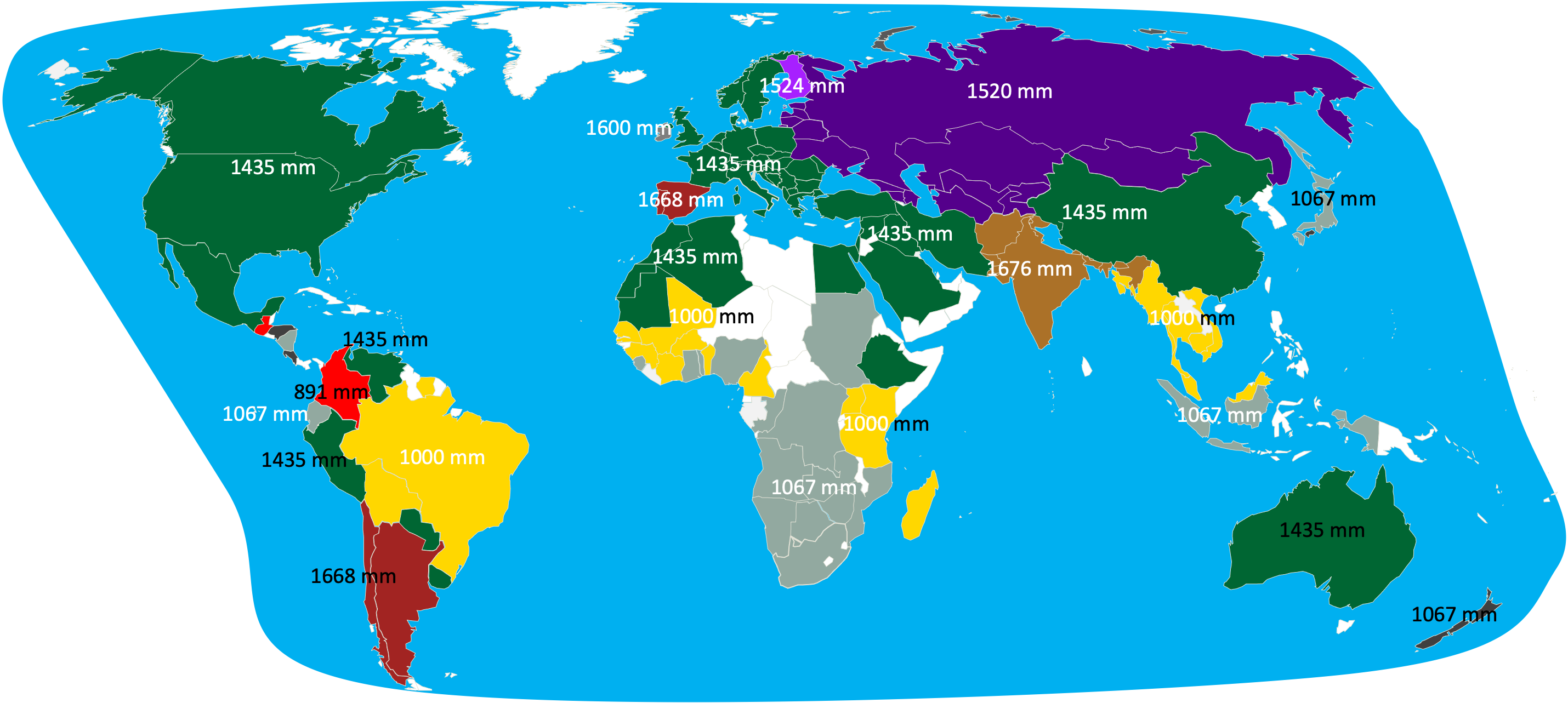
Keywords: railway gauge, railway networks
Source: data compiled from national railway operators
Railway transport plays a major role in the economic life of all countries. It is irreplaceable when it is necessary to transport long distances and large quantities of goods. This transport is especially significant where the infrastructure of other transport is not sufficiently developed. For example, railways in Russia are an important link connecting its European part with regions of Siberia or the Far East, where transportation distances are long and other types of transport infrastructure are poorly developed. It is equally important in Asian countries or the United States of America, where the distances between individual regions or production sites are quite large, and the demand for heavy goods transport is high. Practically all types of cargo are transported by railway transport, which is not always possible with other modes of transport. Although it has all these positive features, rail transport loses to other modes of transport due to the long transportation time, due to the abundance of sorting and transshipment operations required in the transportation process.
Ex. 13‑15 Variety of waterborne transport routes
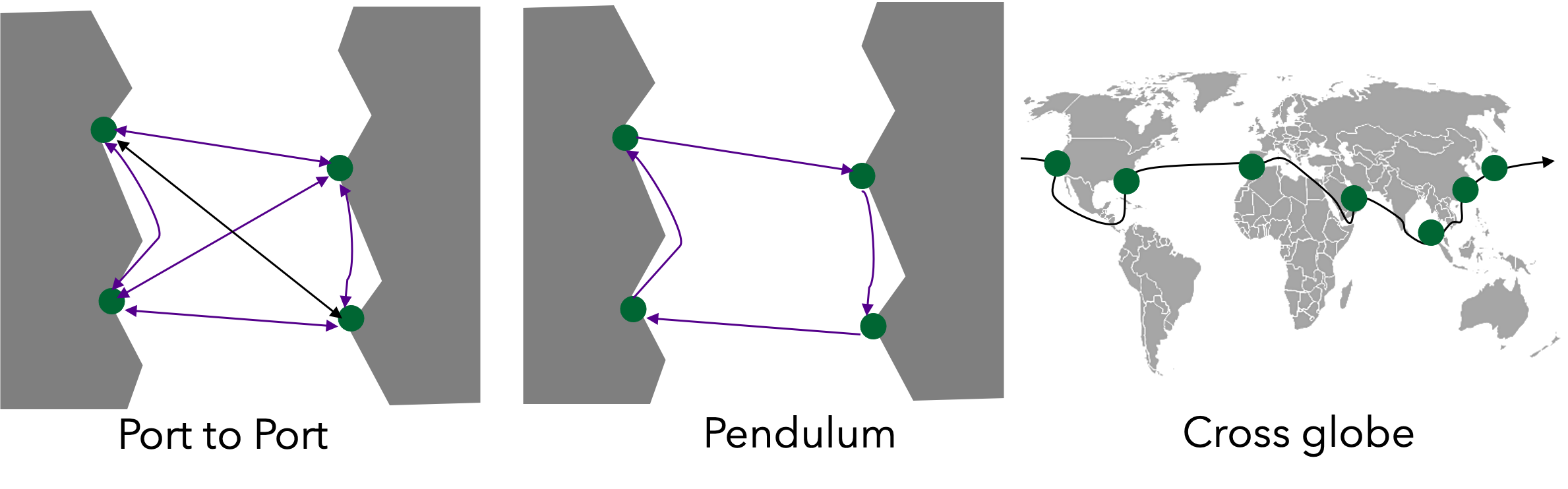
Keywords: port to port, pendulum, cross globe
Source: (Rodrigue, 2020)
Public railway is perceived as railway mainlines, usually owned by the state, intended for the transport of passengers and goods. To connect private warehouses of plants to the railway mainlines connecting railroads are needed.
In international rail transport, when the places of loading and unloading of goods are in different countries, two or more railway infrastructure owners are involved in the transport process. This makes rail transportation complicated, especially when it comes to different technical and managerial standards. It is important to note that there are more than ten different railway gauges in the world (Exhibit 13-14). Even within the European Union, there are at least 4 different gauges standards for railway tracks. Thus, the uninterrupted movement of trains from one state to another often faces the constraints implied by varying standard.
The sub-modes of transportation by water transport are:
- Deep sea shipping – transportation by open sea or ocean.
- Short sea shipping – short and medium distance sea transportation.
- Inland waterways shipping – transportation in rivers and artificial canals.
Transport routes by deep sea or sea transport are classified into three types (Exhibit 13-15).
- Port to port, it is a regular schedule of ships running between ports. Raw materials are usually transported from extraction sites to production sites, the problem of an empty return trip is encountered. The scheme is widely used in short-distance shipping, regular routes between constant ports are also called motorways of the sea.
- Pendulum route. It is typical for transporting containers. A ship, having arrived at a port, unloads and uploads containers including empty ones for return.
- The “around the world” route. It is route, which is typical for container ships sailing between container hub-ports. The logic of an ocean route around the world is based on choosing the optimal distance between the route line and the ports which call a ship regularly. Itineraries are adjusted depending on which ports are signed or terminated. Ports located along such routes have significant competitive advantages for inclusion in such routes.
The transportation of goods by water transport has greatly developed due to the growth of the economies of Asian countries and their international trade with North America and Europe. In the last twenty years international waterborne trade has doubled in volume of tons, and in terms of value it has increased fivefold. Oceanic ships used to transport raw materials – minerals, agricultural and chemical industry products. Globalization and shift of production to Asia caused transportation by deep sea transport to carry even more expensive final products using containers (Ducruet, 2016). Mining, chemical industry or agricultural products are basically transported in bulk ships. During the last twenty years, with the development of intercontinental trade of finished products that are more expensive than raw materials calculated per unit weight, containers have proven to be the most convenient way to transport goods. When transporting containers loaded with finished products, in contrast to transporting raw materials, the principle of consolidation and distribution works well. The main flows of goods in containers are concentrated in a limited number of container ports. The ocean routes between these ports became the main trade routes.
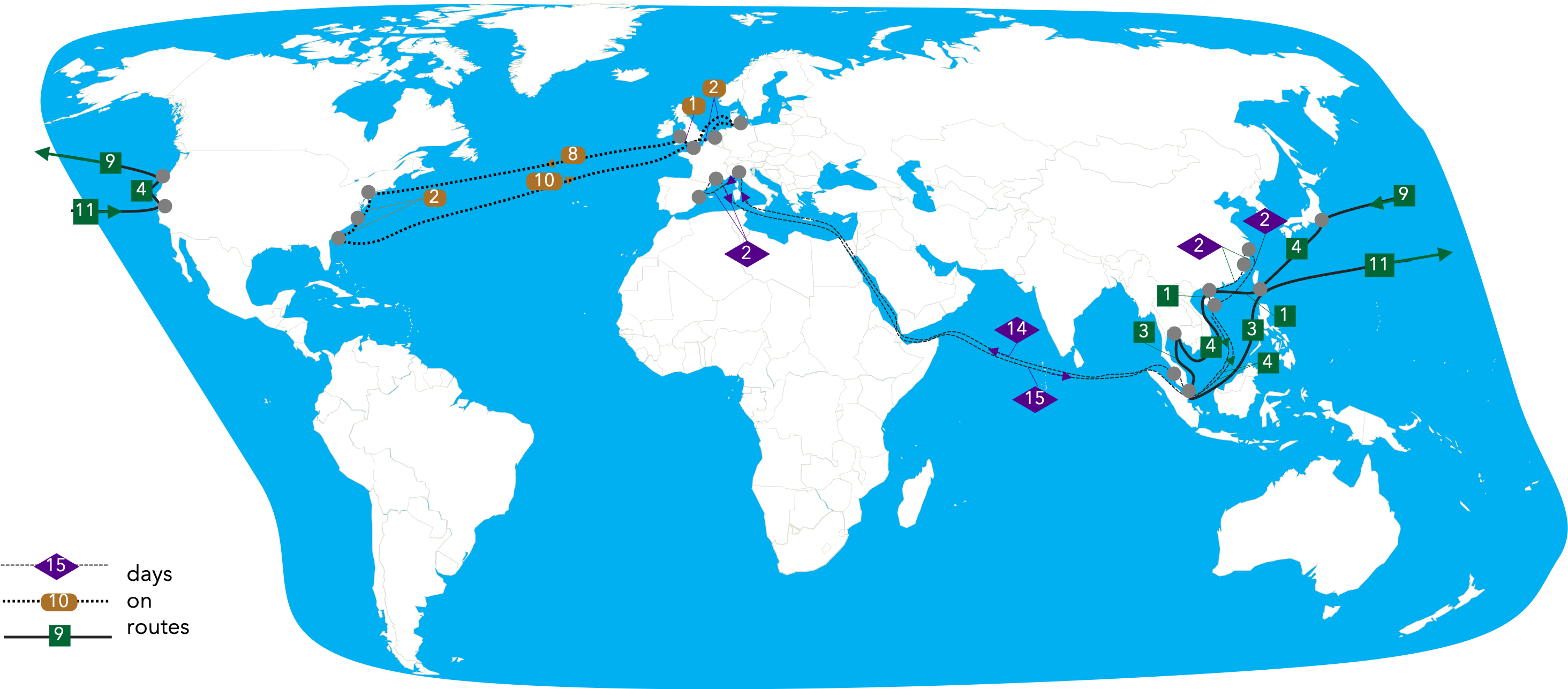
Ex. 13‑16 Approximal duration of transportation
Keywords: maritime routes, oceanic routes, maritime trade
It is the Liner Shipping Connectivity Index (LSCI) that shows the country’s integration into the merchant shipping network and today is one of the main tools for assessing the country’s global trade opportunities (Fugazza & Hoffmann, 2017). Just of few European ports, such as in the United Kingdom, in the Netherlands, in Belgium and Spain fall into the top 20, which is strongly dominated by Asian countries, there are some ports of North and South American countries, some Middle Eastern countries such as Egypt, the United Arab Emirates, Oman.
Ocean lines are usually operated by large ships. The economy of scale effect of carrying a large amount of cargo at once led to the increase of size of the ship. The Suez Canal built in 1869 shortened the connection between the ports of Asia and the North Sea from an average of 16 to 10 thousand kilometers, while the construction of the Panama Canal in 1914 shortened the sea distance between the West and East coasts of North America. Canals are limiting the size of ships, so as an alternative to the Panama and Suez canals, the route around the continents remains. (Exhibit 2.14 in Chapter 2).
In Americas, when shipping line operators to reduce delivery times choose the shortest path, via Panama Canal, the size of ship is limited. A ship only with a length of up to 295 meters, a width up to 32.25 meters, a draft of 13.5 meters can pass through the Panama Canal. Ships that can pass through the Panama Canal are called Panamax, and ships with at least one dimension exceeding the aforementioned dimensions are called post-Panamax ships.
Ocean shipping is widely developed along “around the world” routes. The three busiest global routes served by one of the major shipping lines are South China Express (SCX), Atlantic Express (ATX) and European Union/Mediterranean, EUM. Shipping duration between West Coast of US and Asia takes about two weeks similarly as between Mediterranean ports and Asia. Shipping duration between Europe and East coast of US is about 10 days (Exhibit 13-16). It is important to understand that this is just moving time of the ship.
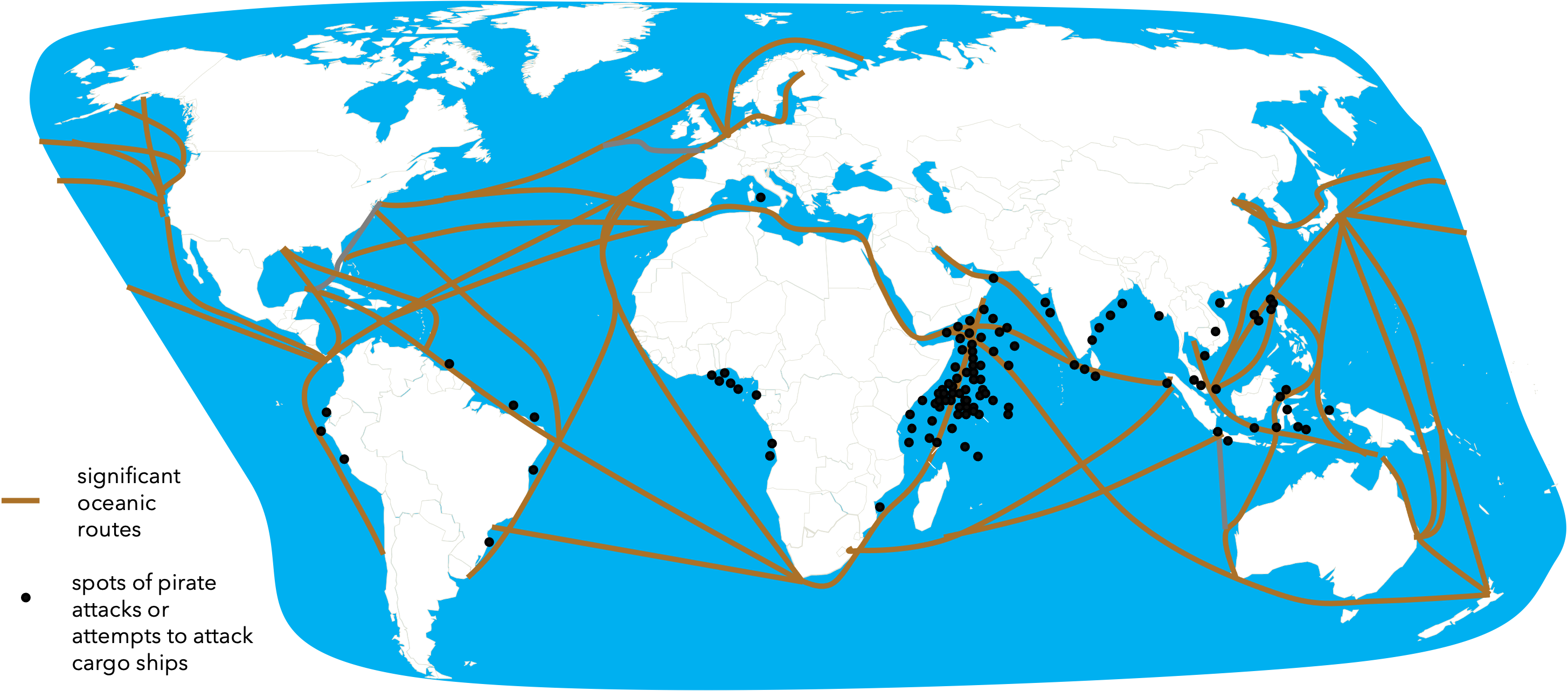
Ex. 13‑17 Approximal duration of transportation
Keywords: piracy, maritime routes
Source: data compiled from major deep-sea shipping operators
Before the ship leaves, the cargo is stored at the port, it requires additional time to wait until whole shipment size to be consolidated. So larger is ship, longer duration of assembling containers in a port for departure. Also, time is needed to bring the cargo to the port and then transport it from the port to the destination point. Also, along a shipping route from Shanghai to Rotterdam, several other port calls could occur, for example in Singapore or Algeciras. So, the total freight time between Europe and Asia or between the US and Asia often takes a month to a month and a half. The largest share of operating costs in shipping takes fuel, port fees and insurance (Notteboom et al., 2022). As ships get bigger, the ratio of fuel consumption to speed increases, so with bigger ships there is less of an economic argument for going faster, even it is possible technically.
Although the 21st century pirates may seem like an exotic, six-centuries-old story, but ocean-going cargo ships are often attacked in certain parts of the world for carrying valuable goods or ransoming crew members. The problem of piracy has reached such a scale that it is not uncommon for ocean freight lines to hire naval vessels for escort and protection against attacks (Exhibit 13-17). Pirate attacks are usually well-organized, armed, and have a well-planned and functioning logistical network for the distribution of large quantities of stolen goods. Shipping lines operators often hire private paramilitary services, in other words mercenary armies, to protect cargo ships. Due to improved means, there has been a significant decline in piracy in recent years.
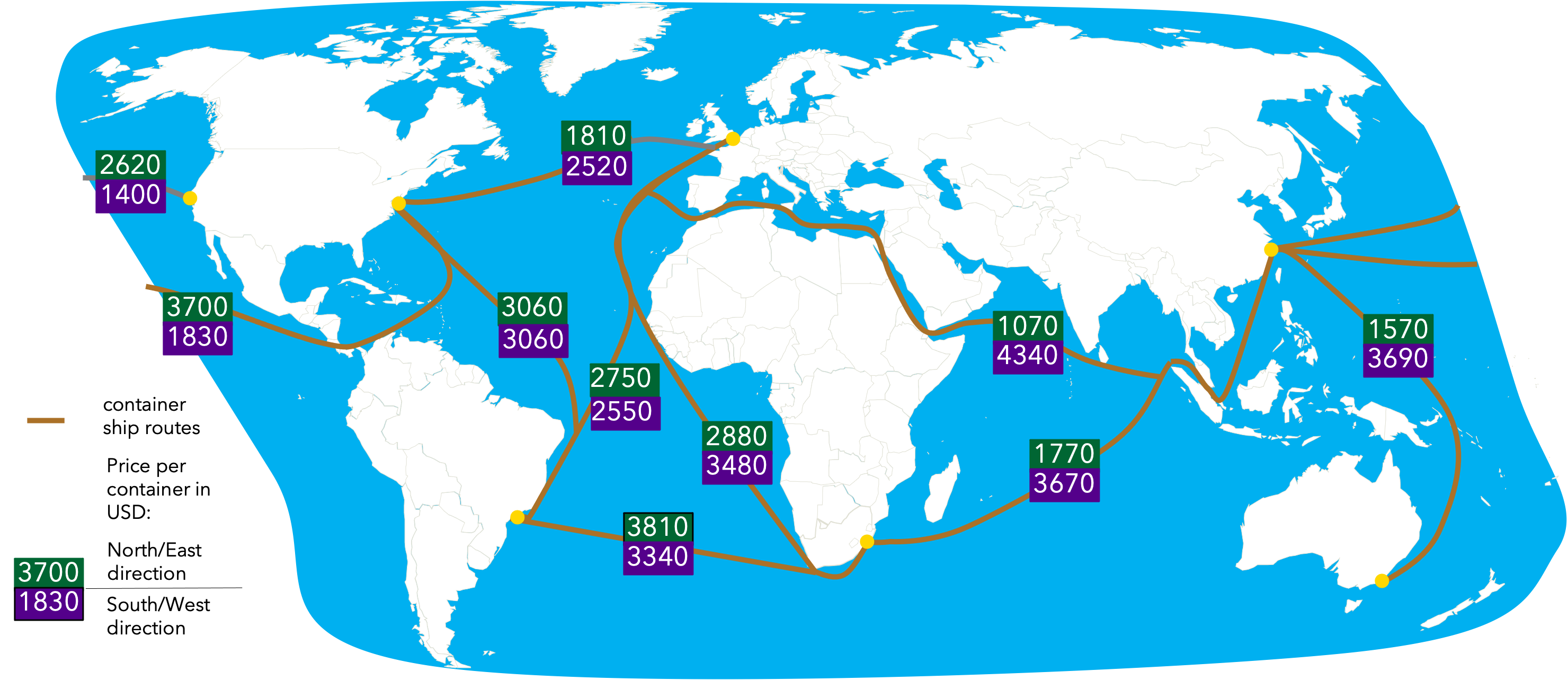
In ocean shipping, there is a very large disparity in prices depending on the direction of transportation. The rates for transporting a container in one direction can be more than four times different from those for transporting containers in the opposite direction (Exhibit 13-18). In the container shipping business, pricing is not based on cost, but on the market demand and marginal utility. If consumers have no other alternative and have a great need to transport a container – the price can be significantly higher than when transporting on those lines, where the demand is low.
Ex. 13‑18 Average container transportation prices in period 2010-2020
Keywords: container prices, maritime trade
Source: Source: data compiled and adjusted from major container shipping firms
Container shipping rates are influenced by factors such as port charges, distance, economies of scale and balance of flows. For example, high demand for shipping from Shanghai to Rotterdam and very low or no demand in the opposite direction. With the COVID crisis and following disruptions in international container availability, the prices on the Asia-Europe and Asia-America route have skyrocketed up to 16,000 US dollars for a 40-foot container in 2022 and have now come back down to a more reasonable 2000 US dollars average price for mid 2023.
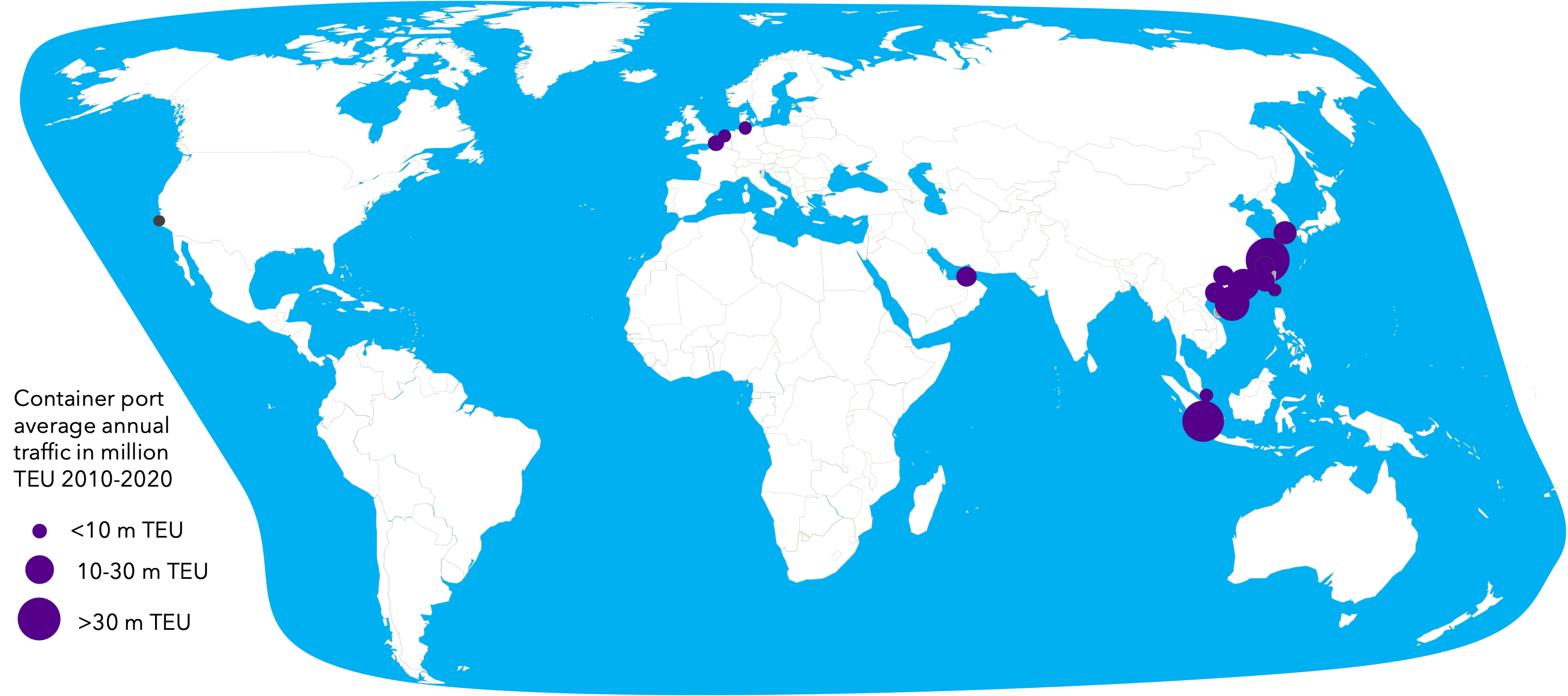
The largest container ports are concentrated in Asia (Exhibit 13-19). Only four ports in the Western countries – Rotterdam, Antwerp, Hamburg and Los Angeles – are in the top twenty largest container ports, as average in period of 2010-2020.
Ex. 13‑19 Locations of largest container-ports in the world
Keywords: container ports, TEU, container
Source: data compiled from ports’ authorities
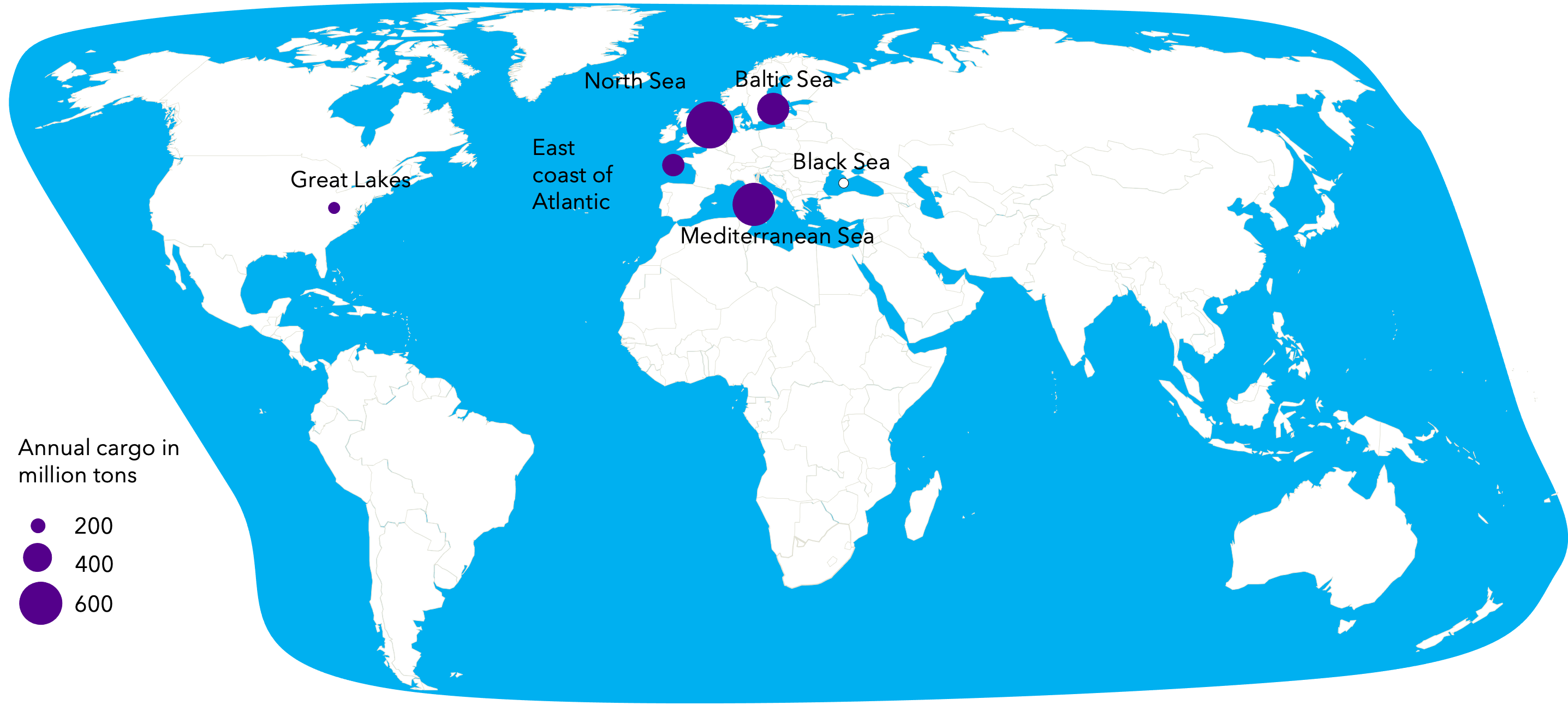
Short sea shipping is assumed as linear shipping in inland seas. Ro-Ro ferries operate mostly in short distances, for example, in the Baltic Sea, the North Sea, the Mediterranean Sea, the Great Lakes in US. In Europe, short-distance shipping is much more developed than, for example, in America, due to the geographical specificity of Europe (Exhibit 13-20). Roll In- Roll-Out or so-called Ro-Ro concept means that vehicles, such as trucks with trailers, roll into the ferry through special sliding doors at the front or rear of the vessel. Ships that are loaded from above using cranes are called Lo-Lo or Load In- Loud Out. Short sea shipping is not just an abstract name, but, in the European Union it is also a legal term directly related to technical conditions. In short sea shipping, pendulum linear shipping schemes are mostly used, and in some cases, port-to-port schemes.
Although many countries of the world have an abundance of rivers, the depth of rivers is the main parameter limiting navigation. Inland waterways could be natural rivers and artificial canals. Russia has the most inland waterways. The length of its inland waterways is as much as 7 times the length of the roads of Western European countries combined and more than 3 times the length of the inland waterways of the United States.
Ex. 13‑20 Intensity of usage of sea motorways in US and Europe
Keywords: short sea shipping, sea motorways
Source: data compiled from national statistics offices
China is second to Russia in the length of inland waterways, but it is dominated by relatively shallow rivers and canals that are only suitable for transporting goods by barge. Large barges or cargo ships that could carry at least 500 tons of cargo or at least 25 moderately loaded containers require a depth of 2.75 meters for navigation. Barges are used to transport goods in inland waters. Barges are shallow-submersible cargo ships that transport cargo mainly through inland waters, rivers, and canals.
Barges are mostly non-self-propelled vessels that are towed by tugboats. If necessary, a whole row of barges is coupled. Barges are mainly used to transport bulk cargo by inland water transport, but with the development of containerization, container barges are gaining more and more importance.
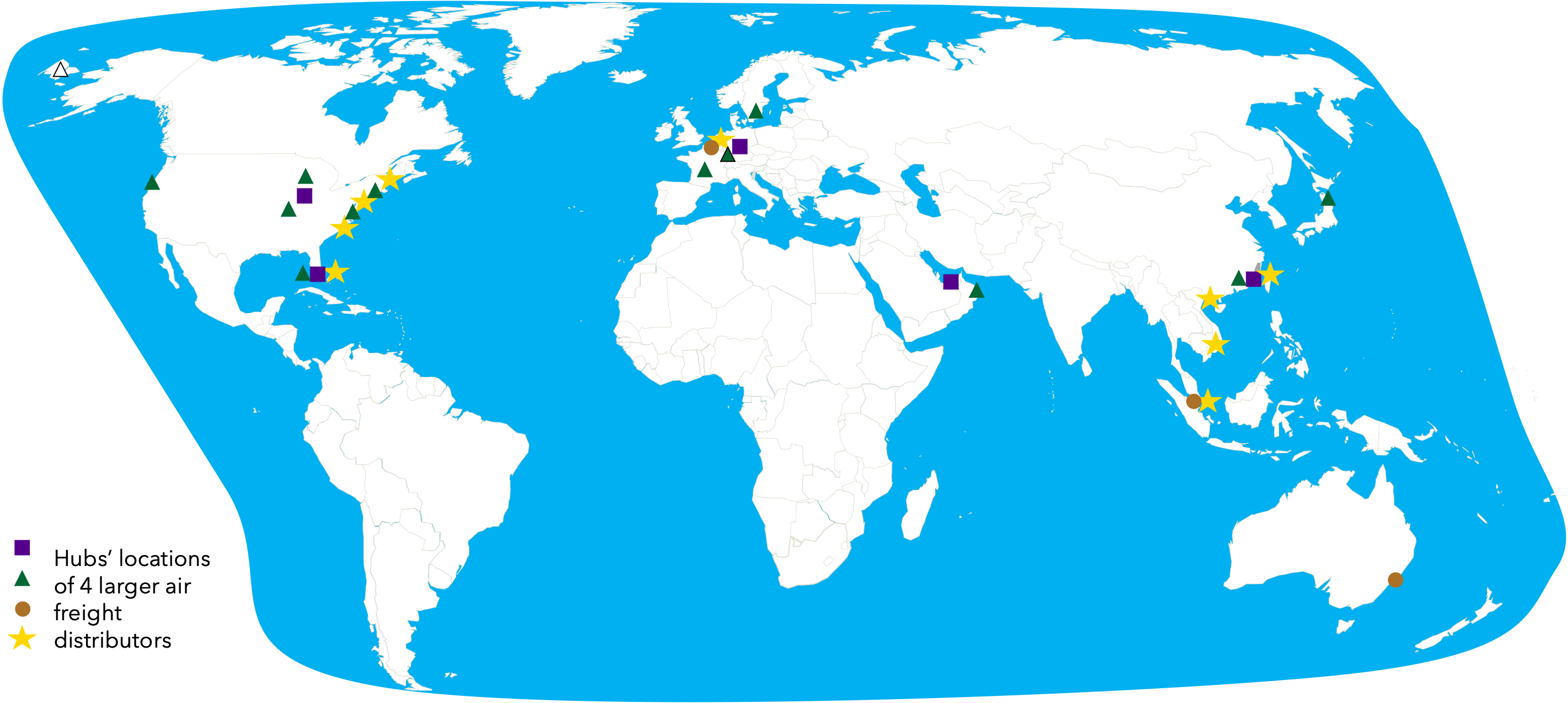
Ex. 13‑21 Locations of major hubs of air freight distributors
Keywords: air freight, parcel distribution, express shipment
Source: data from websites of major air freight distributors
Cargo with a high value compared to its weight is usually transported by air. This transport is also suitable for transporting very urgent goods. Although on average the cost of air transport per ton kilometer is several tens of times higher than that of railways or several times higher than the cost of road transport, the demand for air transport remains relatively high. Cargo transportation is carried out by dedicated freight airlines on the main deck in cargo aircrafts. Cargo can also be transported by aircraft of various brands together with passengers in compartments adapted for the purpose of transporting cargo, if, in addition to the space for passengers’ luggage, there are still available spaces, usually in the front lower deck. Cargo is transported by specialized cargo planes as well, but it is estimated that 60 percent of the cargo ton-kilometers is transported as belly freight by passenger airlines. Global parcel and postal operators use their own aircraft fleet, with an increase in recent years.
The increase in air freight transport was also determined by general trade trends – shipments are becoming smaller, and the need for frequency and speed of delivery is also increasing, especially in those industrial sectors whose products have an extremely short product life cycle, for instance fast fashion, electronics, computers, mobile phones.
The largest air cargo flows are formed between North America, Western Europe and Asia (Exhibit 13-21). The main distribution centres of the four largest air cargo operators are located on the East Coast of the United States, Germany, and the coasts of East Asia. Each of these major freight operators develops carriages using their own hub and spoke principles, each with different hub-airports.
Basically, they have their own unique network architecture. For example, one of the freight operators’ hubs in the USA are located in Kentucky and Louisville, while others are located in Memphis and Tennessee. In Europe, one of these freight operators is based in Leipzig and the other in Liege. These freight operators have intermediate points between Europe and Asia in Dubai and Bahrain. Most often, intermediate hub airports are chosen as points for filling planes and re-sorting cargo.
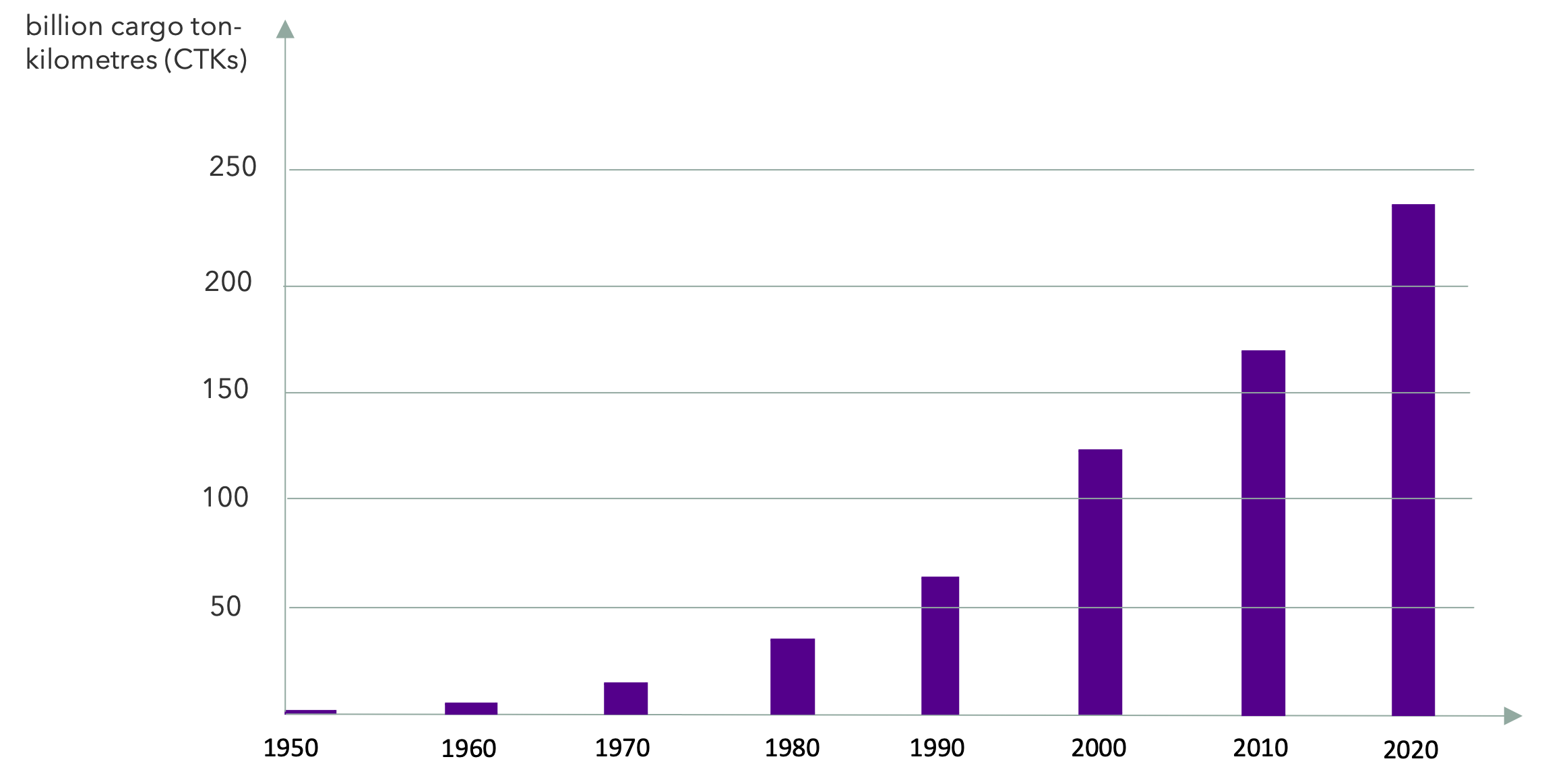
Since the 1960s, the transport performance of air cargo in the world has increased from 10 to 200 billion ton-kilometers per year (Exhibit 13-22). Each of the airlines strives to arrange the architecture of its global network in such a way that every point in the developed world can be reached within 24 hours.
In economically underdeveloped countries, these delivery times are significantly longer. This requires sorting terminals of very high capacity and efficiency at the hub airports, as it is operating with very short time slots to re-sort and load the cargo between arriving and departing planes.
Logistics operators for all transport modes seeks of cargo efficiency improvements and optimization such as avoidance of empty running, increasing load factor, routing efficiency, adapting vehicle size to shipment size, combining origin and destination area in overall logistics strategy, using adaptable transport means for multiple load types allowing the transport of different products during one trip, combining deliveries and collection rounds.
Ex. 13‑22 Global air freight performance
Keywords: air traffic, air cargo
Source: International Air Transport Association, www.iata.org
Share or comment this information on your social media:
Fundamentals of global business
First edition
For citation:
Jarzemskis A. (2025). Fundamentals of global business, Litibero publishing, 496 p.

Full scope of the book is available in various formats
D.13. Global supply chains and distribution networks
About author
The author has been teaching at several universities since 2005. 40+ scientific publications, 10+ international research projects. More about author.