Effective supply and distribution chain management can be a key source of competitive advantage. The Japanese scientist Kenichi Ohmae originally proposed the 3C model that describes the connections between a Customer, the Company and Competitor (Exhibit 12-8). Each of the three entities interacts with the other two (Ohmae, 1983). The competitive advantage manifests itself as an organization’s ability to operate at lower costs than a competitor, which leads to lower prices or higher profits. Another important aspect is that the organization and competitors offer certain values to the same customer. Often those values are different. A customer’s need is defined as obtaining the maximum value at the lowest cost (Spulber, 2007). Of course, in the real world, this is hard to imagine, as more value often comes with more cost and higher price. However, it is very important to examine the value and price factors, because they are essential to understand clearly when a customer decides to buy a product from a particular organization or prefers to choose from a competitor.
Sales and commercial success are driven by either cost advantage or value advantage, or ideally both (Porter, 1985). To obtain commercial success, it is not compulsory to further explore all the ways to reduce costs or methods for value creation and value diversification in global business, but a manager does need to assess how making the right logistics choices can be used for gaining a competitive advantage.
Ex. 12‑8 Ohmae’s 3C model for competitive advantage

Keywords: 3C, value advantage, cost advantage
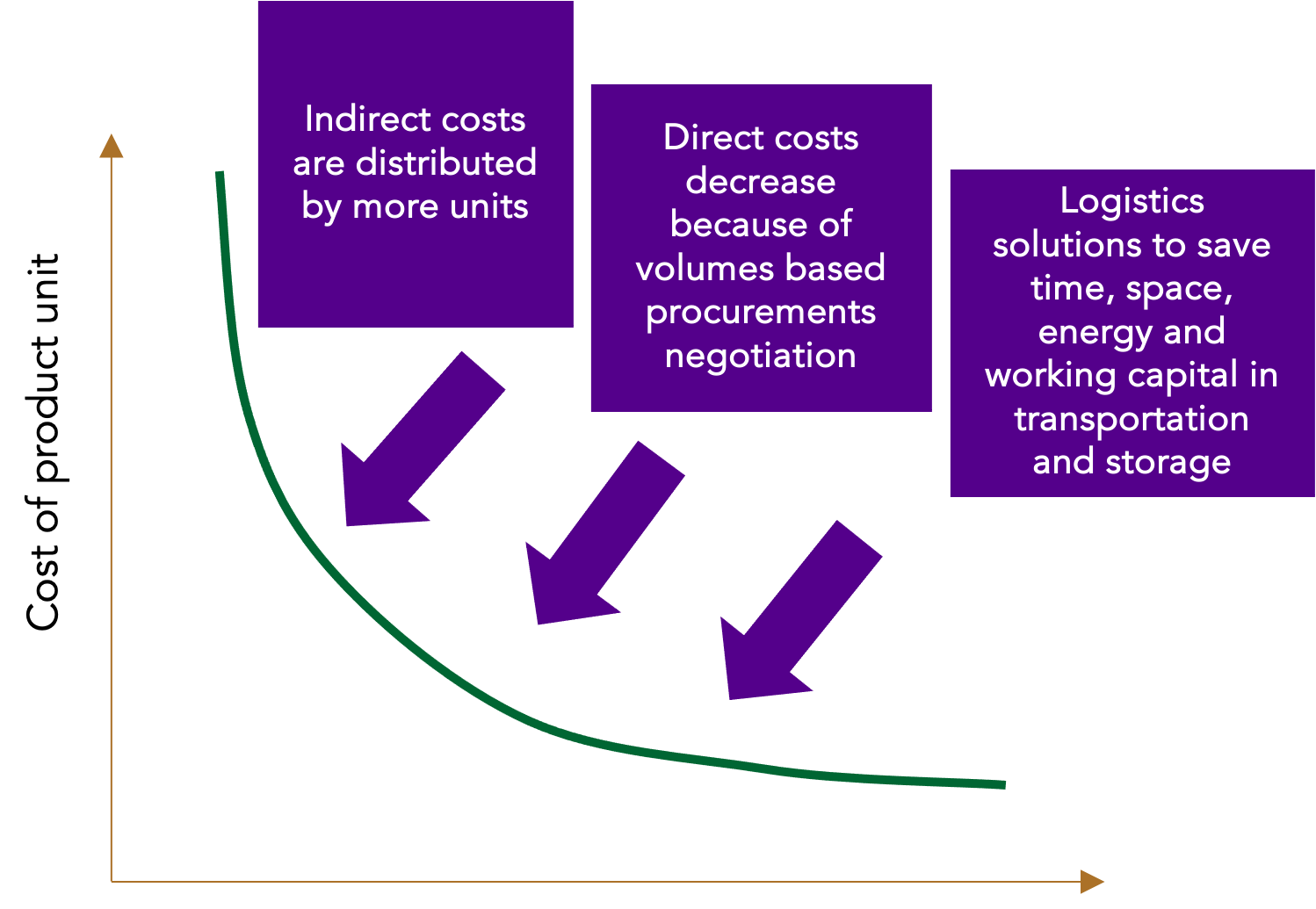
In the case of international business, as the distances between raw materials, production and consumption increase, logistics becomes more important in creating a competitive advantage. Logistics creates a competitive advantage through both cost reduction (Exhibit 12 9) and improved user experience. In many industries, often is just one competitor which acts as a low-cost producer, and usually that competitor has the largest sales volume in the sector. Economies of scale mean that as the number of units produced and sold increases, fixed costs are spread over a larger number of units, which lowers unit costs and enables the unit to be sold at a lower price. As production volumes increase, not only can overhead costs be spread over a larger number of units, but variable or so-called direct costs also become lower. When producing larger volumes, it is possible to negotiate the price of purchased raw materials, as production volumes increase. Deeper and narrower specialization can be achieved at the level of the organization ‘s structural units and even at the level of the position of an individual employee. An important role is played by logistics, which can ensure a decrease in unit costs due to space, volume and energy savings in transportation and storage.
A very good example of gaining a cost advantage is a worldwide known Swedish furniture manufacturer that has become a globally recognized brand. Logistics strategy has become very significant for obtaining cost advantage. For example, this manufacturer basically abandoned distribution warehouses, and instead of that the retail stores themselves began to perform the warehouse function. After choosing the goods, the buyer goes to pick up the goods from the warehouse using the principles of self-service. In the warehouse, each location is numbered by marking rows and places in the queue. Although at first glance, the buyer does not notice the reduction of costs, however, this principle makes it possible to eliminate intermediate warehouses, where storage and constant replenishment of goods to retail outlets cost significantly more.
Ex. 12‑9 Nature of cost advantage by logistics
Keywords: volumes, costs, unit price
In the furniture industry, many organizations used to work on the principle that the consumer could see the product in the store and then order it. In this case, the customer would have to wait several weeks or even months for the order to be fulfilled. However, when ordering such units, transportation is significantly more expensive, as the furniture is delivered as small orders, often assembled. So, furniture takes a lot of space during transportation. All these little things imply costs. The Swedish global furniture manufacturer applied the principles of economy of scale in the logistics and retail supply chain itself. Furniture is not transported from manufacturing to the store in separate small shipments according to the customized orders. A store, which actually functions as a warehouse, is replenished with all furniture with certain regularity. The vehicles in such schema are used fully loaded, a very large shipment of cargo is ordered, which allows the retail logistics manager to negotiate the transportation prices.
The ergonomics of the packaging also greatly contribute to the reduction of logistics costs. In general, furniture is not a relatively heavy product when assembled. In Europe a 40-ton freight truck can hold up to 24 tons of cargo. Thus, if the furniture is transported assembled and packaged not efficiently, the 24-ton limit will not be reached after filling the cargo space to full volume capacity, it ‘cubes out’. Cube out occurs when a cargo space has reached its volumetric capacity before reaching the permitted weight limit. This results in wasted and inefficient utilization of assets. If the furniture is transported in small parts and packed efficiently in a very space-saving way, the vehicle can hold 24 tons when floor is fully loaded. In this case, unassembled furniture units will fit significantly more space than assembled or inefficiently packed. The price of fully loaded trucking depends less on the weight of the shipment and more on the volume and distance. So, a fully loaded truck running the same distance, depending on how efficiently the furniture is packed, will transport a different amount of units in one delivery, and therefore, the cost of that transportation will be almost the same or very similar. Thus, the cost of transportation of one unit with effective packaging will be lower than the cost of transportation of one unit inefficiently packaged. Such small things that appear at first glance add up and eventually turn into significant monetary expressions when average logistics costs of one production unit are calculated. An organization whose average unit logistics costs are lower can offer its customers a lower price for the final product. This is where gaining a competitive price advantage over competitors comes into play.
Another example for efficiency and effectiveness increase in operations is the principle of product packaging. More about the physical methods of packing the goods, the types of cargo are presented in chapter 14, but the crucial moment in saving logistics costs is the size of the shipment. For example, in the production of ketchup, if ketchup is ordered to be transported in barrels as liquid bulk cargo, the conditional price of transporting one litter will be much lower than transporting the same amount of ketchup if it is bottled. As the size of the shipment increases, more options of transport modes and packaging are possible. Some cargoes are transported as dry or liquid bulk, simply by pouring them into a vehicle, such as a rail car, truck, or even a ship’s hold. For example, when grain or fertilizer is transported as bulk, the cost of transport per ton can be many times cheaper to compare if the same grain or fertilizer is transported in bags of 50 kg on pallets in containers or in trailers. A large quantity allows a freight transport service provider to apply more efficient technical solutions, which are significantly cheaper when comparing with small quantities. Thus, the principle of economies of scale, described by Adam Smith, is successfully applied in logistics as well, not only in manufacturing production.
The lower the price per unit weight of the product, the more crucial the logistics cost become, comprising a higher percentage of the final product cost. Therefore, the cost advantage created by logistics is especially important in such industries where the cargo is relatively heavy compared to its price. For example, the products of the furniture industry are relatively heavy compared to their price, if to compare them with, say, smart phones. Weighing only a few hundred grams, a smart phone will cost the same or even more than the average bed or sofa. So, it is not surprising that it was the furniture industry, where Swedish company mastered to make logistics as tool to get cost advantage.
Another way logistics saves costs for the manufacturer is to avoid warehousing and use just-in-time logistics. Just-in-time logistics means that raw materials, semi-finished products or components are delivered at the time they are needed. In this case, the manufacturer does not need to have a warehouse of raw materials and stockpile materials. The cost savings are twofold. First of all, there is no need to own or rent storage facilities, no security, no lighting, heating or cooling, no electricity costs. The second aspect is even more significant. It is related to frozen cash. After all, in order to accumulate resources for production, be it raw materials, components or semi-finished products, they need to be bought before. Purchased materials impose capital costs. If cash for that is borrowed, there is need to pay interest on the loan. The more inventories an organization has for production materials, the more cash is frozen, or the more interest it will have to pay. When organizations choose to accumulate production materials, they usually stockpile them, depending on the type of material, so that they form a sufficient buffer securing production processes for a duration from several weeks to several months. Manufacturers who choose just-in-time delivery logistics usually keep inventory for a period of several days to one to two weeks. Manufacturing without having long-term stocks is risky, because if there are disruptions in the logistics system, the lack of at least one raw material or component can lead to the disruption of manufacturing process including downtime of the entire factory in some cases. This is very well illustrated by supply disruptions during the COVID-19 pandemic. A disruption in the delivery of semiconductor microchips to car factories led to the suspension of all car assembly lines. This fact proves that industries such as the automotive choose not to accumulate long-term inventories and depend on supply reliability before pandemic.
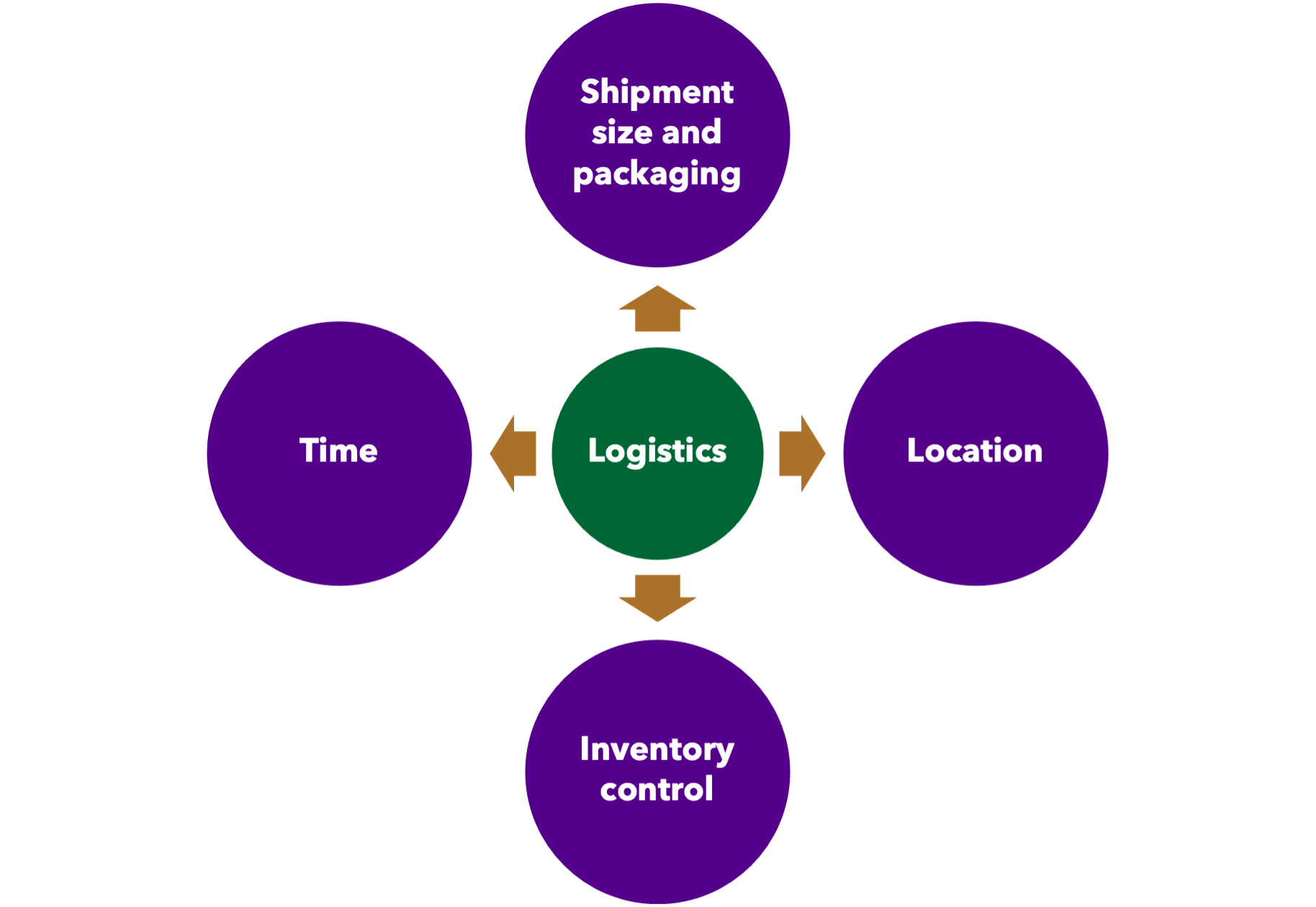
Ex. 12‑10 Value creation by logistics function
Keywords: logistics functions, time, location, inventory, product
An out-of-stock situation does not only occur in the supply chain of production materials to the factory. Retail businesses are reluctant at maintaining inventory in their own premises and warehouses. More and more retailers tend not to stock a large amount of a wide range of goods that the customer can buy immediately. On-demand delivery and e-commerce are becoming increasingly popular, especially after the COVID-19 pandemic. In this way, wholesalers and retailers avoid storage costs and to freeze funds in inventory.
In global business, many international organizations, which position their production capacities and product distribution markets in different locations, seek to use the cost advantage created by logistics as much as possible. From this point of view, they usually undercut local businesses simply by applying economies of scale to the logistics itself. Logistics creates benefits in global business not only through cost reduction, but also through value-creating functions (Exhibit 12-10). In manufacturing, logistics allows to reduce the cost of the product by minimizing and using the right shipment size, packaging and inventory levels. However, very significant functions of logistics are associated with place, time and control. Logistics assets, if operational and efficient, enables access to a wide range of locations, which means a greatly expanded market and lower distribution costs. Logistics ensures that materials or finished products are in the right place whenever they are required. Effective planning of physical flows is enabled by communication technologies that allow real-time control of every smallest element. By controlling the time and location of each element and knowing the possibilities of freight velocity, it is possible to plan production processes much more accurately, respond to demand and create the most effective marketing strategy.
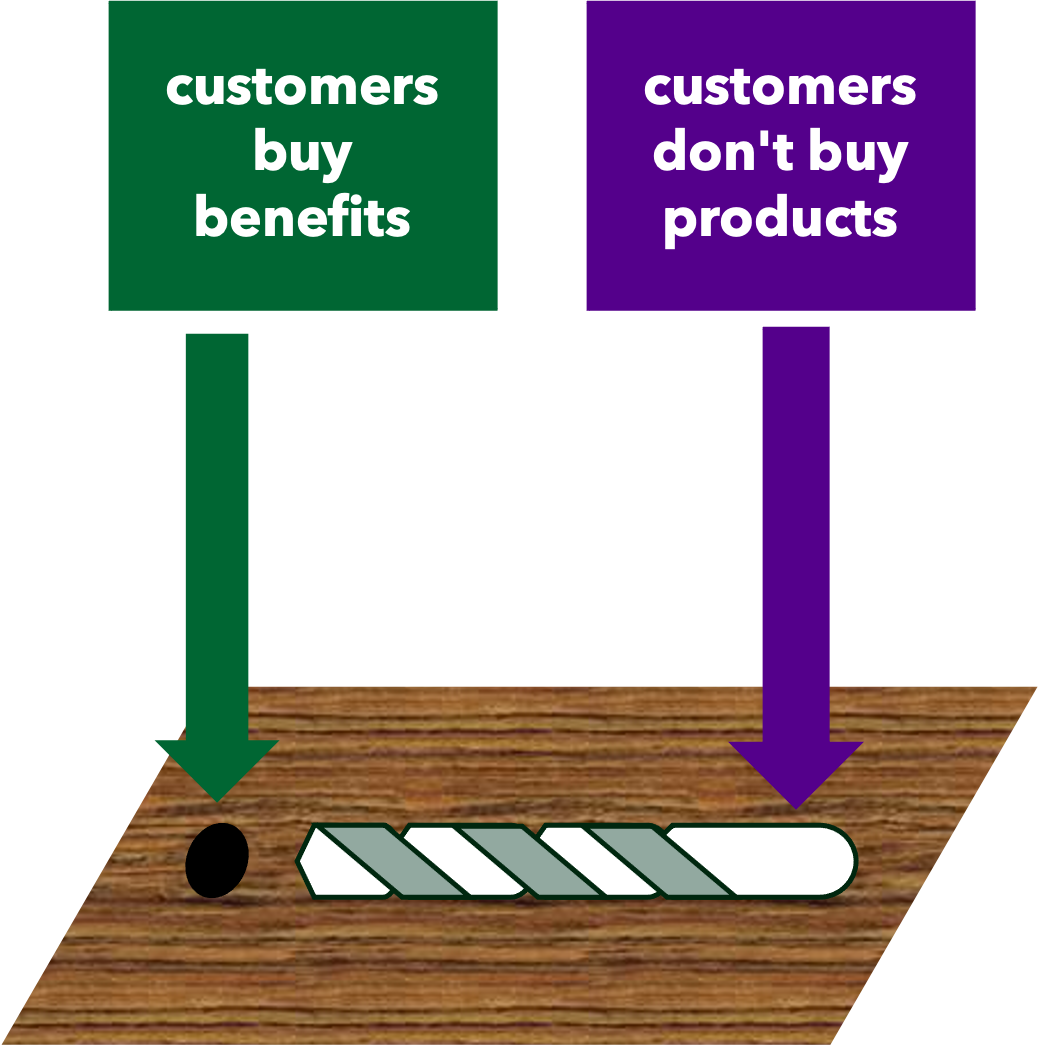
One of the rules of marketing is that “customers don’t buy products, they buy benefits.” For example, a person buying a drill probably needs not the drill itself, but the hole that this drill will make in the wall (Exhibit 12-11). These benefits may also be intangible, not related to specific product features, but to a more abstract concept, like perception of a value or the image of an organization.
Ex. 12‑11 Advantage by value
Keywords: value, drill
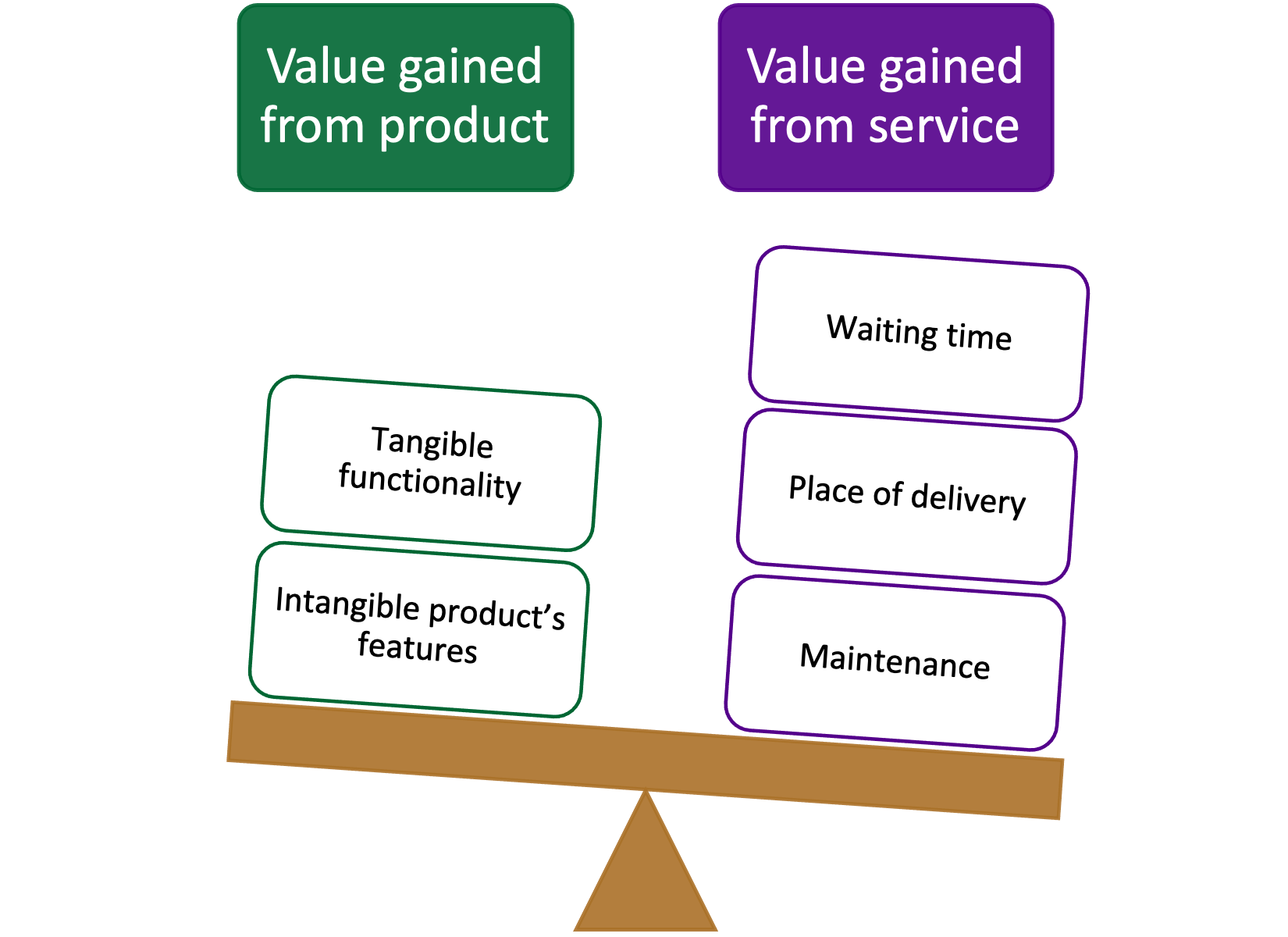
However, when it comes to value, the main role belongs to the product’s specific user features, functions, and convenience. In addition, it is possible that the product or service outperforms the competition in a certain functional aspect. If the product is simply a commodity, it is very difficult to extract a value advantage through consumer characteristics only. For example, 95 gasoline properties defined by a standard, so it is very difficult for a fuel seller to distinguish how his gasoline is better than the competitor’s gasoline. It can equally be said that bread is bread, eggs are eggs, and it is very important for the unskilled consumer to distinguish what makes one better than the other. In the commodities market, price advantage is often more important. However, only large organizations can achieve success through economies of scale and low pricing. Organizations are looking for ways to add value in ways other than just product features, but also by service (Exhibit Error! No text of specified style in document.-12).
Essentially, creating a value-added strategy involves market segmentation. Different market segments have different value perceptions and needs. For example, car manufacturers produce different models for different market segments. Even model variations differ – engine power, gearbox type, color, number of doors, design elements. A unique product is essentially tailored to the individual needs of a specific segment. Another way to add value is through service. A product that is stored in a warehouse thousands of kilometers away and could be delivered to the customer in a few weeks has significantly less value than the same product on the store shelf and the customer can take it home immediately.
A good example is of a Swedish furniture manufacturer. When the buyer comes to the store of this brand, he can choose the furniture he likes, buy it and immediately load it into his car and take it home. The speed of delivery, purchase procedures, their convenience are often equally or more important as the product itself and its characteristics. Thus, efficient logistics can significantly increase the value for a consumer. Such examples as in the furniture industry can be found in other areas as well. Numerous markets are currently experiencing a downward trend in the loyalty towards the “brand’ and are moving towards a “commodity” market status.
Ex. 12‑12 Options to increase a value
Keywords: service, product
It just means that it becomes increasingly difficult to compete solely on brand or organization image. Once an innovation is created, it doesn’t take long for competitors to create a similar or even better technology. For example, after an US manufacturer introduced the first phones with touch screens, it didn’t take long for South Korean and Chinese manufacturers to enter this product segment and redistribute the markets. Thus, the reduced customer loyalty forces organizations to look for differentiation not only through technology, but through other means.
Many organizations are focusing on service to get competitive advantage. Service in this context refers to the process of building relationships with customers through the provision of complementary services. This supplement can take many forms, including delivery services, after-sales service, financing packages, technical support, etc. This has led to the emergence of new businesses, such as the widespread food delivery service, especially during and after COVID-19 pandemic. Even traditional restaurants are forced to cooperate with platforms for food delivery to homes and workplaces, because it has become popular among consumers. Getting meal delivered to the workplace allows the customer to save time and avoid the need to go to a restaurant for lunch. These illustrative examples describe the benefits created by the service and enabled by logistics.
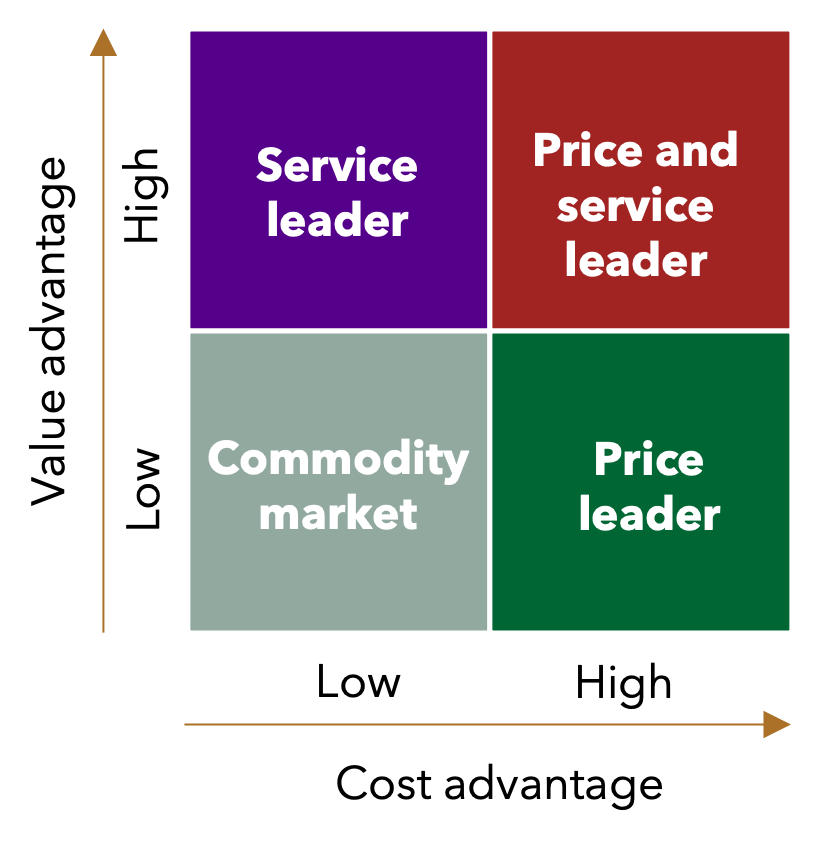
However, it is rare in practice to find a situation where organizations focus only on value advantage as well as only on price advantage. The exhibit 12-13 illustrates four cases. The bottom axis shows two orientations to cost advantage. Products having lower costs advantage are more expensive, higher cost advantage products are cheaper than most competitors. The vertical axis shows the differentiation of value advantage into high and low advantage. It is very difficult for organizations or their specific products that are in the lower left corner of the matrix to compete. Their products are indistinguishable from competitors’ offerings, and they have no cost advantages. These are typical commodity market situations and ultimately the only strategy is to either move to the right of the matrix or move up.
Ex. 12‑13 4 segments depending on value and costs
Keywords: cost advantage, value advantage
The transition to a price leader by cost advantage is essentially only possible through economies of scale and scale-up. Implementation of new technology may provide an opportunity to reduce costs, but in such situations the same technology is often available to competitors. Increasing sales volumes essentially means capturing an ever-increasing share of the market and pushing out competitors in short term. This is often associated with the desire to become a price leader. In order to move to a value advantage, it is necessary to change the product itself, its technological and functional aspects, or to change the quality of service.
The right upper segment is quite rare, because in this case the competitive advantage is greater than the competitors and it allows organizations to become dominant not only in the local market, but also in the global markets. This essentially means offering a value to the market that is high and at a cost that makes the product affordable to a large number of consumers. Global organizations have achieved this by successfully balancing production costs – using cheaper labor countries, cheaper raw material markets, while creating a sense of value for the customer through efficient delivery speed, product distribution systems and easy accessibility to the customer. Effective logistics solutions are enablers both to reduce costs and to increase value.
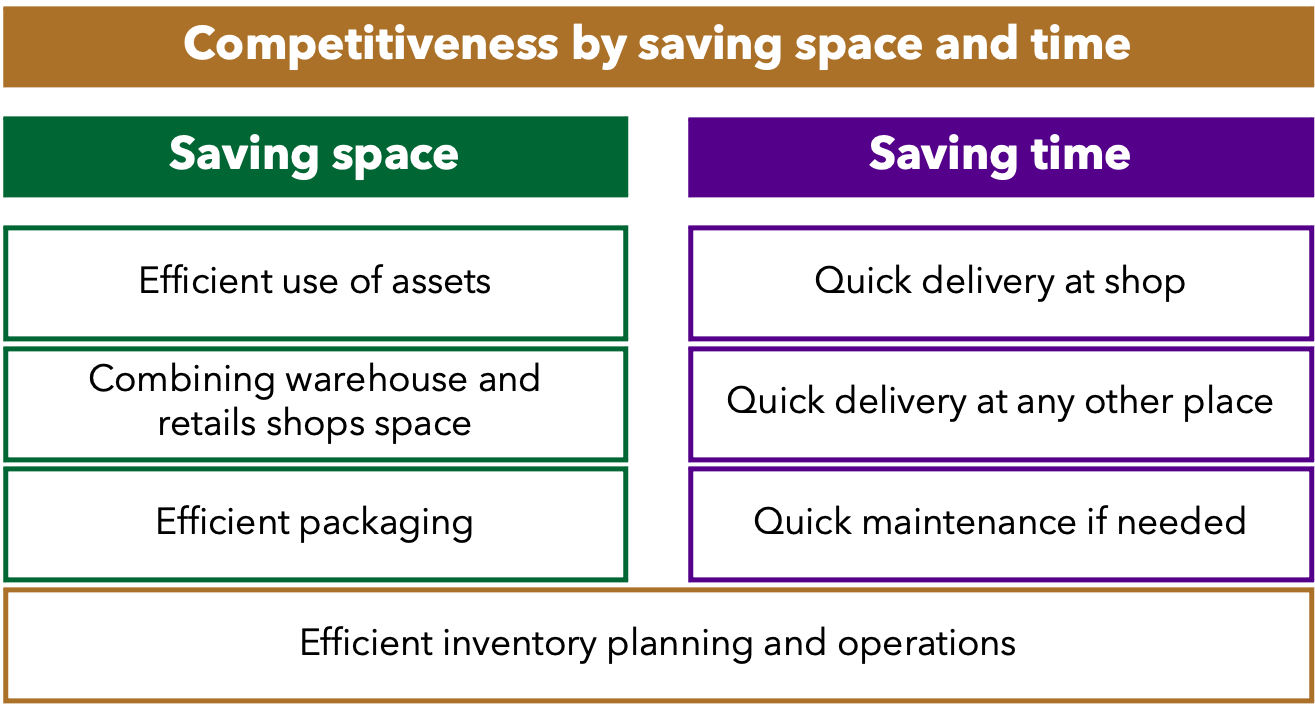
An increasingly powerful way to achieve cost advantage is not only specialization and economies of scale, but logistics and supply chain management too, especially when distances between materials, production and consumption increases due to business globalization. In many industries, logistics costs account for such a large proportion of total costs that significant cost reductions can be achieved by fundamentally changing logistics processes. Logistics essentially saves the customer’s waiting time. For example, a Swedish furniture manufacturer has combined its retail stores with warehouses for finished products. After buying a product in the store, the buyer has the opportunity to pick it up from the warehouse rack, load it and take it home same day.
Ex. 12‑14 Competitive advantage by saving time and space in global business
Keywords: space, time
Logistics solutions enable saving space in the warehouse, loading more goods into one vehicle, which means that storage and transportation costs are reduced. Thanks to the standardized packaging, and components compatible with the flat pack and self-mounting furniture brought Swedish furniture manufacturer to the industry leader position globally.
In addition to saving time and space, logistics creates opportunities to provide customers with more value (Exhibit 12-14). For example, the possibility of returning the product, consulting before purchasing, obtaining a warranty service after purchasing, and other elements of the transaction are significant factors that determine the customer’s decision to choose the product. Even to ensure the return of the goods to the customer, the organization must organize and standardize the logistics operations and procedures for the returned goods.
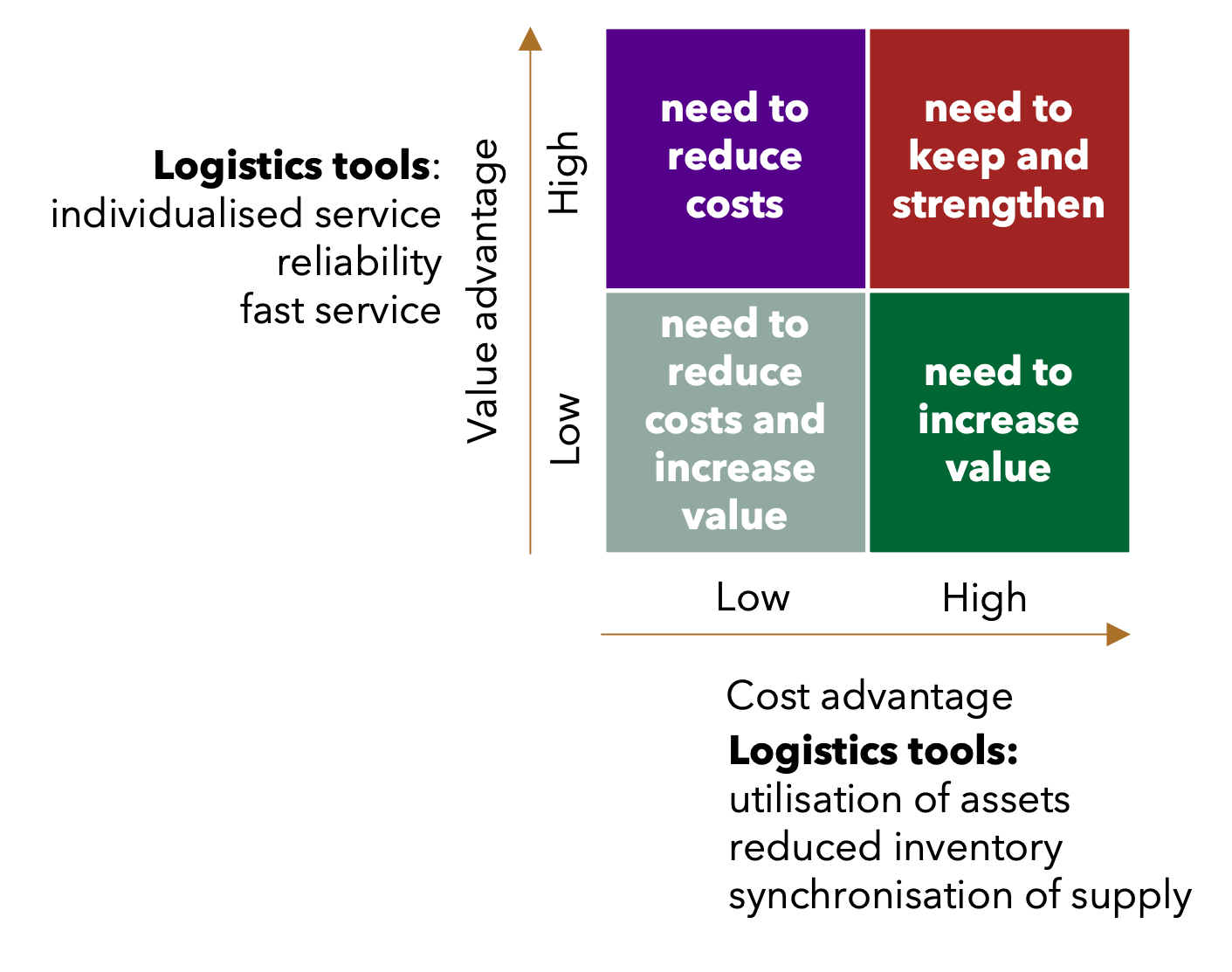
Increasing the value advantage with logistically advanced solutions is becoming more and more applied in various industries. Arguably, logistics management can help an organization achieve both cost advantage and value advantage. As the exhibit 12-15 shows, there are several important ways to increase productivity through logistics and supply chain management. Although these leverage opportunities are discussed in detail later in the book, it is important to note that the opportunities for better capacity utilization, reduced inventory, and closer integration with suppliers at the planning level are significant.
Nor should one underestimate the prospects of gaining a value advantage in the market through superior customer service. Increasing the value advantage with logistically advanced solutions is becoming more and more applied in various industries. Arguably, logistics management can help an organization achieve both cost advantage and value advantage.
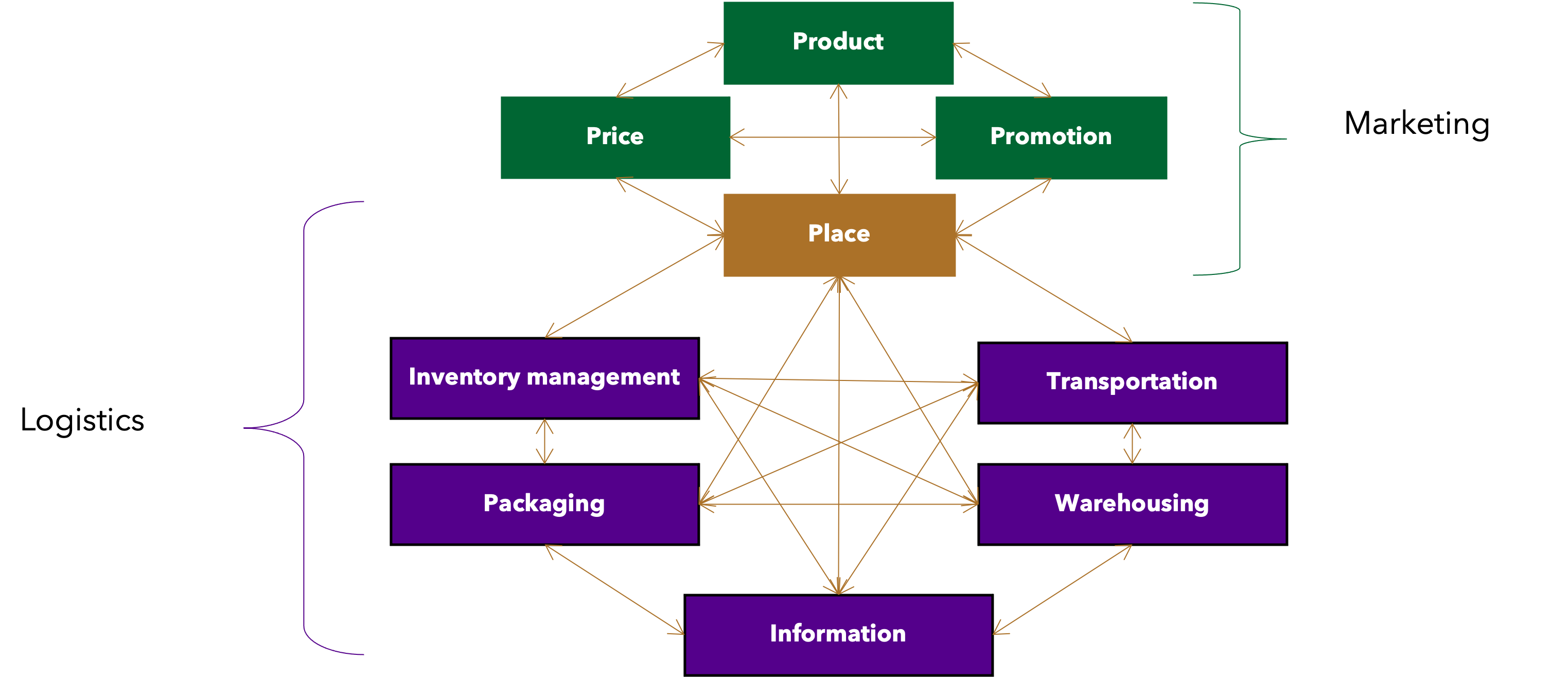
Although authors describe marketing as the Kotler’s “4Ps” – “Product”, “Price”, “Promotion” and “Place” – it is probably fair to say that in practice the focus has always been on the first three. “Place”, better described as “the right product in the right place at the right time”, has rarely been considered part of mainstream marketing. However, logistics is directly related to the marketing element “Place”, as far as it relates to geographical location and inventory management, storage, transportation, packaging and information exchange (Exhibit 12-16).
Ex. 12‑15 Logistical tools for increasing value or cost advantage
Keywords: value advantage, cost advantage
When increasing value through service level and reducing costs through logistics efficiency play an increasingly important role in competition, logistics becomes more than a “Place” in the marketing complex.
In some industries and markets, brand power has declined in past decade, and customers have become more willing to accept substitutes. Technological differences between products have decreased so that it is increasingly difficult to maintain a competitive advantage by using only product features in marketing. In such situations, organizations begin to compete in the field of service level.
The customer may be influenced by price or perception of image, but increasingly important is the availability of the product. In other words, is the product in stock or can client to have it now? This trend is also important in the business-to-consumer and business-to-business sectors. For example, organizations supplying the automotive industry need to ensure timely delivery of goods directly to the assembly line, as car assemblers want to avoid warehouses for raw materials. This is how the concept of just-in-time logistics was born. Basically, this concept perceived as synchronizing logistics with production or trade processes. A food manufacturer supplying a large chain of supermarkets must ensure supply in such a way that the retail shelves are constantly full at a certain percentage of capacity. Time has become a much more critical element in the competitive process. Customers in every market want shorter delivery times. Product availability often wins against customer loyalty to a brand or supplier – meaning that if a customer’s preferred brand is not available and a substitute is available, most likely substitute to be chosen.
The success or failure of any business is determined by the level of value to a customer in a particular industry. Value to a customer can be defined simply as the ratio of perceived benefits to total costs incurred (Exhibit 12-17).
Ex. 12‑16 Logistics in Kolter’s marketing complex
Keywords: product, price, promotion, place
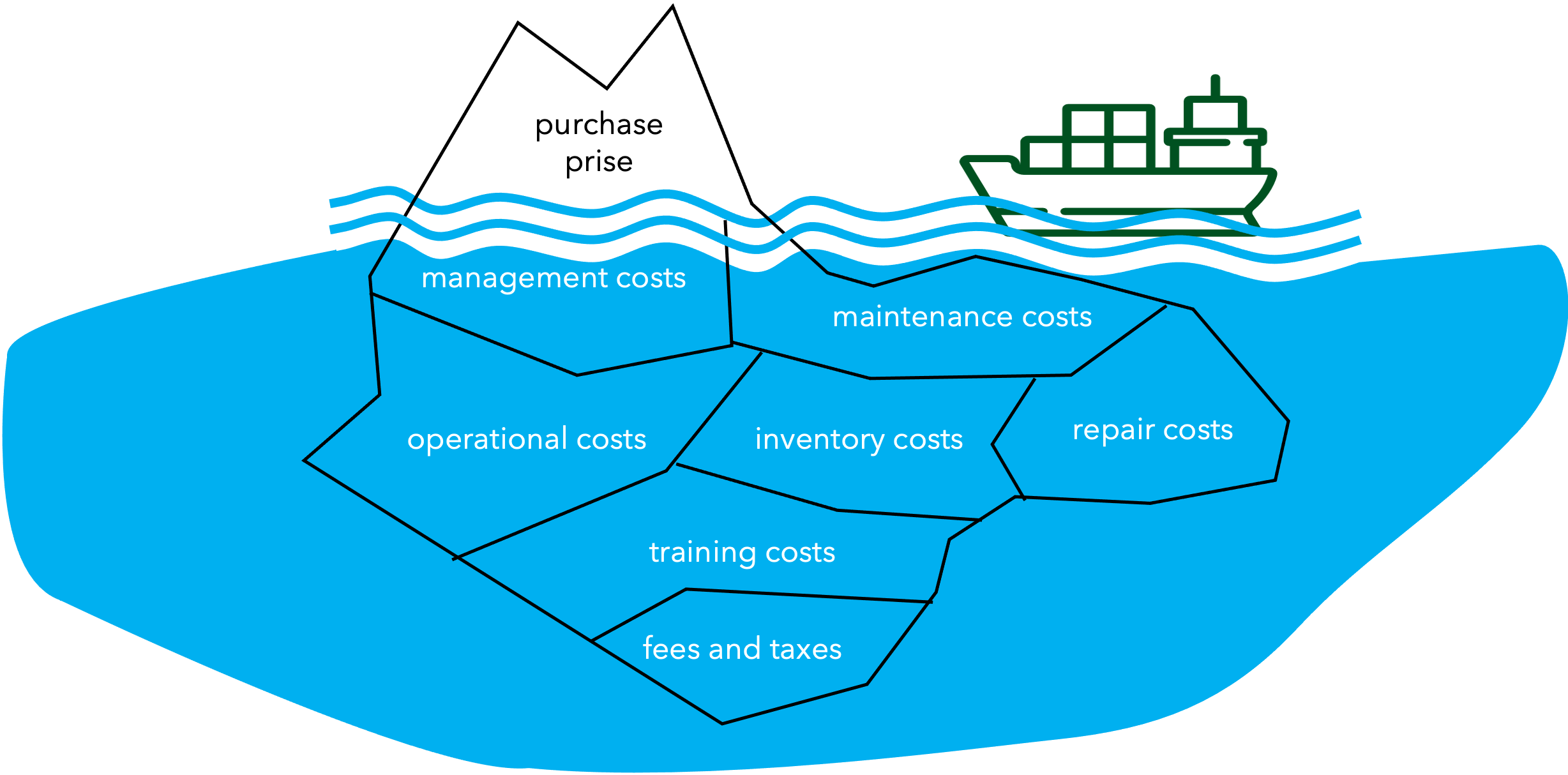
The term “total cost of ownership” is used here. Total cost of ownership includes not only the purchase price, which is the amount paid by the buyer at the time of purchase, but also maintenance costs, operating costs, recycling costs, etc. Especially in the business-to-business segment, total cost of ownership can be a decisive element in the purchase decision. In global business, when organizations cooperate in the form of a vertical alliance, often partnership decisions are long-term, so ownership costs such as maintenance, service, availability of spare parts become more important than just the purchase price.
The exhibit 12-18 shows the “iceberg” effect of the total cost of ownership, where the direct purchase price is the only visible aspect of the cost, and below the waterline are all the costs that will occur after the item has already been purchased. Often, hidden “underwater” costs exceed the purchase price.
Although the total cost of ownership is often greater than the original purchase price, the benefits of after-sales service can often equal or exceed the tangible features or functionality of the product. For example, the difference in technical characteristics between two competing products is small, the decision to buy may be determined by customer service after the transaction – for example, repair or supply of spare parts. And this is where logistics plays a very important role, because depending on the logistics, not only the price of the after-sales service, but also the speed and reliability can vary.
Ex. 12‑17 Value to a customer

Keywords: total cost of ownership, perception of value
A global organization that has an extensive network of service specialists around the world will be able to repair the product much faster than an organization that does not have a such network of service specialists. It is exactly the same with the supply of spare parts or consumables.
A global organization with an efficient warehouse network for spare parts or consumables or developed global just-in-time logistics channels, will provide significantly faster aftersales service than a local business that has not developed such a logistics of service and maintenance network.
Ex. 12‑18 Total cost of ownership
Keywords: hidden costs, purchase price
Thus, the value of the product is shaped by the technical characteristics, functionality and service of the product itself. The shares of product functionality and service in total value vary across industries and even in product categories, but in any case, they are both active factors. When evaluating the total cost of ownership, all costs incurred during the purchase, as well as costs incurred after the transaction, are included. However, it is very important to consider the cost of response time (Exhibit 12-19). Basically, for a customer who has to wait for a spare part, the waiting time is a cost. In the case of manufacturing, this wait could lead to delay in production. In cases of crucial delays in materials or equipment repairs, it becomes necessary to stop the entire production line, but fixed costs and labor costs do not disappear anywhere. In such cases, use fast delivery services, express mail, or even send shipment as accompanied passenger luggage by place, can be cheaper than keeping the whole production line down.
Ex. 12‑19 Decomposition of value

Keywords: response time, costs, service level
Basically, a product has no value until it is in the hands of a customer. It follows that whether a product or service is made available or not, is essentially a function of logistics. Availability is a complex concept affected by many factors that combine to deliver the expected customer service quality. These factors may include, for example, frequency and reliability of delivery, inventory levels and order cycle times. Indeed, it can be said that ultimately, customer service is determined by the interaction of all those factors that affect the availability of products and services to the customer.
Ex. 12‑20 Customer service elements timeline

Keywords: pre-transaction, post-transaction
In practice, many organizations have different approaches to customer service. Customer service can be divided into three levels: pre-transaction, transaction and post-transaction (Exhibit 12-20). Pre-transaction elements are elements related to organization policies or programs, e.g., written statements of service policy, organizational structure and system flexibility.
Transaction elements are those customer service variables directly related to the performance of the physical delivery function, e.g. product and delivery reliability. Post-transaction customer service elements typically support the product while it is in use, such as product warranty, parts and repair services, customer complaint and product exchange procedures.
Share or comment this information on your social media:
Fundamentals of global business
First edition
For citation:
Jarzemskis A. (2025). Fundamentals of global business, Litibero publishing, 496 p.

Full scope of the book is available in various formats
About author
The author has been teaching at several universities since 2005. 40+ scientific publications, 10+ international research projects. More about author.